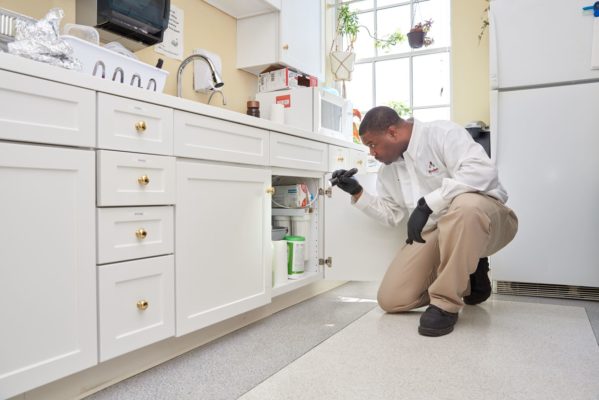
If you’re facing a bed bug infestation, you may want to enlist the help of our trained canine team, including “Sherlock”, our bed bug sniffing dog. Canine inspections can provide the fastest, most reliable way to identify live bed bugs and viable eggs. Here is a quick review of what’s involved in the inspection process:
Read More »
What to Expect During a Canine Inspection
December 5th, 2011Pest Control Insulation
December 2nd, 2011Is your attic in need of insulation? Consider T•A•P (Thermal-Acoustical-Pest Control) Insulation, provided by Modern Pest Services. T•A•P insulation is a revolutionary green insulation for new and existing homes and buildings made from recycled paper that incorporates an EPA-registered pesticide containing borate acid. Not only does T•A•P outperform traditional insulation in nearly every category, it also controls pests such as ants, termites, and cockroaches at the same time!
Preventing Flea Infestations
October 21st, 2011
Education and early detection are critical steps in preventing flea infestations. A flea-infested dog or cat can introduce hundreds of new flea eggs into a home each day, leading to enormous flea populations. Once a home becomes infested, control can be challenging, time-consuming and expensive.
Read More »
Accolades for Modern Pest Services
October 21st, 2011
Modern Pest Service is proud to report that it has been included in PCT’s second annual “Companies to Watch” special report. The report highlights 25 companies that are putting good ideas to work to achieve their business goal.
Read More »
Flea Removal and Proper Extermination
September 23rd, 2011In 2011, the U.S. suffered through one of its hottest summers on record. The sweltering temperatures spurred a significant increase in the flea population, which thrives in hot and humid environments. Flea pupae can lay dormant throughout the cold winter months and reawaken during summer if left undisturbed, making the summer and fall months time to take action. If your pets exhibit any signs of having fleas this season, immediate flea removal and extermination is of the utmost importance in order to prevent you and your pets from harm. Read More »
The Impact of Bed Bugs in Hotel Rooms
August 17th, 2011Many Americans are concerned about the presence of bed bugs when traveling, and believe that infestations in the United States are increasing. In fact, according to a recent survey by the National Pest Management Association (NPMA), 80% of Americans are most concerned about encountering bed bugs in hotel rooms. These tiny blood feeders have become the number one pest problem faced by hotels, motels and similar hospitality venues. Bed bug control is inherently difficult, but even a single complaint can turn into a public relations nightmare for a hotel. Read More »
Pest Prevention Tips for Food Facilities
August 1st, 2011Whether you manage a restaurant, food processing plant or grocery store, you need to be vigilant about protecting your business from pests and nuisance wildlife. Unfortunately, many people wait until a crisis occurs to deal with pest issues which can put your customers, your reputation and your bottom line at risk. A better idea is to be proactive about pest management and partner with a reputable pest control company to help you develop an integrated pest management (IPM) program. Although inspection, identification and treatment are the basis of IPM, pest prevention is a critical first step in any IPM program.
Read More »
Selecting the Best Bat Removal Professional
June 24th, 2011If you find one bat in your home, chances are that you have a full colony living within the house. Bat removal isn’t easy. In fact, it’s quite a tedious job. Bats are classified as a pest species due to their tendency to reside in people’s homes. However, as common as these pests may be, much of the public remains confused or misinformed about bats, their habits, and how they can affect humans and the environment.
Read More »
Tick Removal and Facts to Help Avoid Lyme Disease
June 21st, 2011
Insects are capable of spreading many diseases, but very few are actually caused by the insects themselves. Instead, other organisms are passed through saliva when a person is bitten. These tiny organisms can range from bacteria to viruses to protozoa. Unfortunately, their presence in insects is one reason why people have become so acutely aware of pests such as mosquitoes, ticks, and fleas, as well as the diseases that may be contracted through their bites.