


We’re here to help
Find Modern Pest Services Near You
Modern Pest Services technicians are local experts that understand the unique pest challenges in your community
Ready For Expert Pest Control?
Enter your zip code below or call (800) 323-7378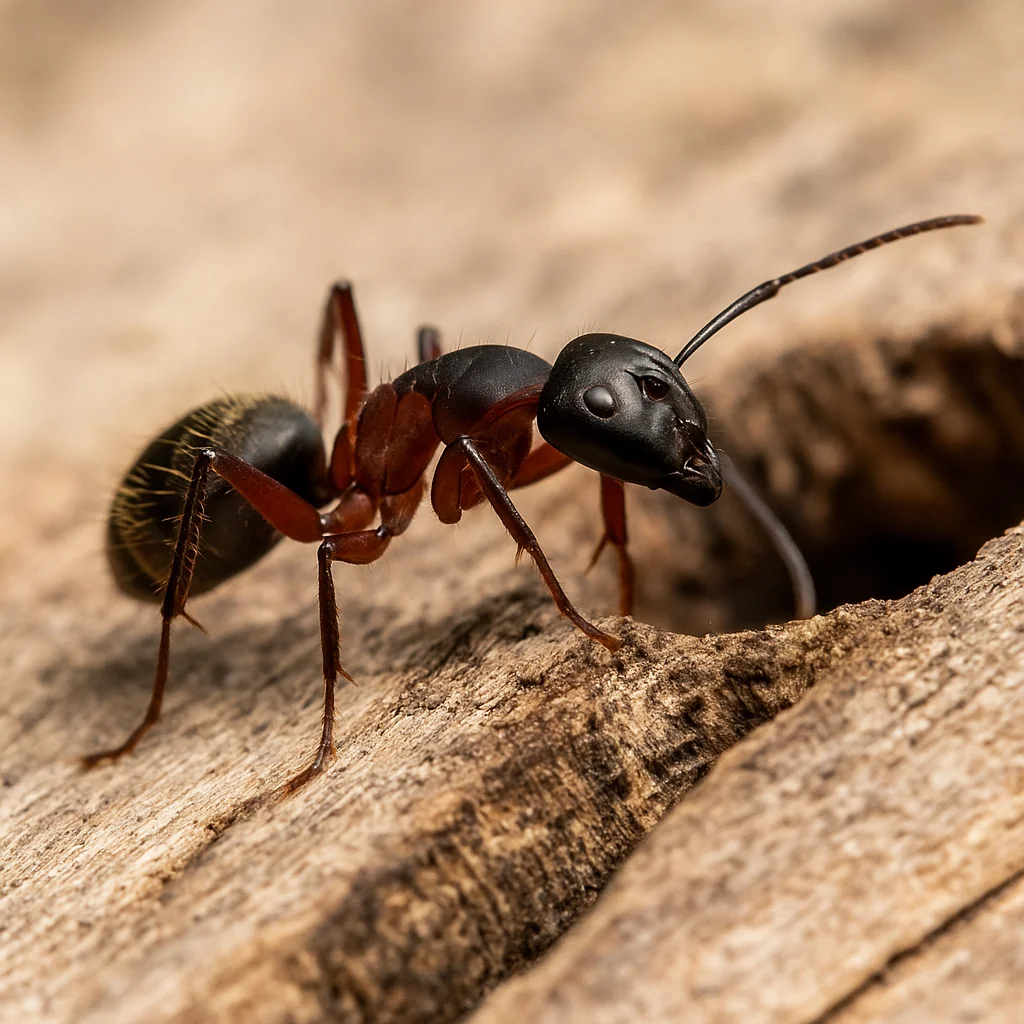
Lasting Solutions for Ant Invasions
Don’t let a carpenter ant infestation cause structural damage to your home. Modern’s HomeCare Green Pest Control Program provides an effective treatment to carpenter ant infestations while minimizing the amount of pesticides used in and around your home for the safety of your family and pets.
During your initial service, a Pest Management Professional will conduct a thorough inspection and provide a detailed report documenting where carpenter ants were found and the extent of the current infestation. Our residential pest control professionals focus on areas that are prone to infestation, such as on windows and window sills, porch supports, and more. Instead of handling an infestation on your own, reach out to our pest control professionals today for environmentally responsible pest control for carpenter ants and other ant species.
Expertise And Experience
Extensive experience in diverse pest control, with trained professionals and a proven track record in effectively managing infestations.
Eco-Friendly Methods
Utilizing environmentally friendly methods for pest control, demonstrating a commitment to safety for your family, pets, and the environment.
Comprehensive Solutions
Our Carpenter Ant program is a cornerstone of our Home Care Green Package, providing year-round protection against over 55 different pests. We believe the best protection is prevention, which is why our process starts with an expert phone consultation to review your home’s history and current issues.
Satisfaction Guarantee
Backed by a satisfaction guarantee, this service provides homeowners with peace of mind and confidence in maintaining a pest-free environment.
How to Identify Carpenter Ants in Your Home
Color alone is not enough to identify carpenter ants because many ant species in New England are dark brown or black. Some carpenter ants may appear reddish-brown, but color variation exists across several species. Although carpenter ants are often larger than other ants, size alone is not always the most reliable way to identify them during an infestation.
One of the clearest ways to identify carpenter ants is by the damage they leave behind, especially tunneling through moist wood and the small piles of wood shavings, or frass, near nesting sites.
Why Pest Control for Carpenter Ants Matters
Carpenter ants can cause significant damage by tunneling through damp or weakened wood and expanding their nests over time. The longer an infestation goes untreated, the greater the risk to parts of your home’s structure. Just as important, it is difficult to feel comfortable in your home when ants are actively invading it. Early, professional pest control for carpenter ants can help stop the infestation before the damage becomes more extensive.
Common Ant Species Found in New England Homes
Although thousands of ant species exist worldwide, only a handful are commonly found in New England homes and around foundations. The most common include the following:
- Odorous House Ants: About an eighth of an inch in length, these brown or black bugs seek food in homes, particularly sweets. If crushed, they smell like old coconuts, giving them their name.
- Pavement Ants: Only about three millimeters in length, these dark brown or black ants are shiny and small. You might notice white hairs on their bodies. They nest under patios, porches, and sidewalks, coming inside to find food.
- Citronella Ants: If these ants feel threatened or get crushed, the emanating odor may remind you of lemon verbena. They are less likely to want human food than the other two species mentioned so far would.
- Carpenter Ants: This species tends to be noticeably larger than the others listed, up to half an inch in length. Usually dark brown or black in hue, they tunnel through moist wood, kicking the shavings behind them as they dig.
Our service provides effective pest control for ants in ways that are safe for you and your family, guests, and pets. If you’re already seeing signs of activity, here is how to resolve a carpenter ant infestation before the damage gets worse.
The Modern Solution to Ants
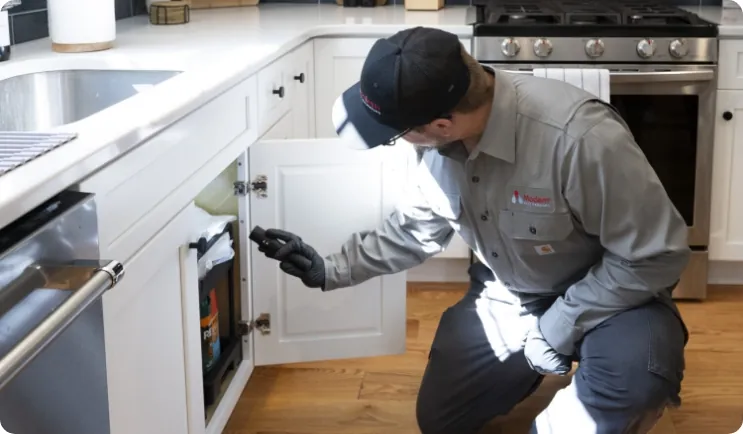
Our Carpenter Ant control program targets the specific interior and exterior areas where these pests nest, travel, and forage. Because Carpenter Ants hollow out wood to create nesting galleries, our treatment protocol is built around precision. We utilize specialized materials placed directly into both natural and excavated voids, neutralizing the colony at the source. This targeted approach establishes immediate structural protection by addressing the specific “hot spots” where activity is concentrated.

Inspection
If you see ants, call Modern Pest Services for a professional inspection. Our technicians will identify the specific ant species and locate the source of the infestation to determine the best course of action.
Prevention
As a homeowner, you play a key role in long-term success. Your pest management professional (PMP) will work with you to implement a collaborative plan, including sealing entry points, managing moisture, and addressing sanitation around your property.
Treatment
A customized treatment strategy using Integrated Pest Management (IPM) techniques will be implemented to eliminate the entire colony, not just the visible ants, while keeping your family and home in mind.
Education
We empower you with knowledge. Our technicians clearly explain the “why” behind your specific ant problem—from ant behavior to the unique conditions on your property that attract them—helping you confidently maintain a lasting, ant-free environment.
Ant Control is Part of Our Comprehensive HomeCare Green Program
HomeCare Green
Eco-Friendly Pest Control for
a Healthier Home
Year-round protection for common household pests
Coverage includes rodents, ants, and 55+ common pests
Tri-annual inspections and treatments
100% Satisfaction Guarantee
Unlimited callbacks
+SMART Monitoring
Smart 24/7 Intelligent Rodent Detection and Prevention
Everything included in HomeCare Green
SMART monitoring system for advanced rodent detection
Includes 2 SMART eyes and a modem, with the option to add more eyes or SMART catches
Proactive monitoring of high-risk areas
+YardGuard
Bite-Free Living Starts Here
Perimeter treatments targeting key areas to stop pests before they enter your yard
Focused application to ensure protection against mosquitoes, fleas, and ticks
Keeps your yard safe for outdoor activities, providing peace of mind throughout the season

Is it Safe for my Family and Pets?
At Modern Pest Services, our number one priority is to keep you and your loved ones safe and your home pest-free. We do very targeted applications using the least toxic materials possible in or around your home. This is achieved through a careful inspection where pest “hot spots” are located in order to help minimize conditions that promote pest activity.
As a result, the random application of material is always avoided. Our highly-trained team will always make sure to avoid applying materials in places that your family and pets may have frequent contact. The labeling on our HomeCare Green products indicates that the material is non-transferable once dried. If you are ready to start service, or if your current provider is not delivering the results you expect, contact us today. Our experienced ant exterminator team delivers excellent service, effective solutions, and a 100% satisfaction guarantee.
Carpenter Ant Control FAQs
Don’t see your question answered? Get in touch today!
What is the best time of year to start ant pest control?
If you already have ants in your home, the best time to start ant pest control is right away. For proactive prevention, spring is often the ideal time because ants become more active after winter and begin searching for food and nesting areas. Learn more about why homeowners often notice increased carpenter ants in spring and what that seasonal activity can mean for your home.
How much does an ant exterminator cost in New England?
Prices for ant exterminators from Modern Pest Services can vary based on the size of your home, the ant species involved, and the degree of the infestation, among other factors. To find out how much your customized pest control for ants would cost, please reach out for a free inspection and quote.
Why am I suddenly seeing so many carpenter ants in my home?
First, the infestation may have reached the point where you notice them and/or their behaviors. Or perhaps this is a new infestation.
In either case, if your home contains moist untreated wood, this can attract carpenter ants to exposed areas. If the wood is already softening, the impact of the ant presence can be more significant as they tunnel through the material to create their nests. So, check areas where leaks can exist in your home because moisture seeping into the wood can form a perfect place for a carpenter ant presence. Our pest control for carpenter ants helps to eliminate them.
What are the signs of a serious ant infestation?
The easiest sign to spot: ants in your home, which often occur in groups since these are social critters. As they trudge through your home in search of food, particularly your kitchen and pantry, they leave behind special chemicals that attract additional ants to the hunt.
If you notice damage to the wood in your home, carpenter ants may be causing this destruction as they tunnel through the wood. Unlike termites, they don’t eat the wood, engaging in this behavior to build nests. Outdoors, you may notice small dirt mounds created by ants, a colony that may find its way indoors to eat and drink.
Do you offer ongoing or seasonal ant prevention plans?
Our ant control program is a core component of the HomeCare Green plan, providing comprehensive protection against more than 55 common New England pests, including rodents and wasps. We prioritize proactive prevention over reactive spot treatments, utilizing environmentally friendly techniques to maintain a pest-free environment. This service includes scheduled triannual treatments to ensure consistent, year-round protection and long-term results for your home.
How can I help prevent ants from coming back?
Indoors, make sure to wipe down and sweep away crumbs, clean up spills, and otherwise make it difficult for ants to find food in your home. Store food in airtight containers (including pet food) and vacuum rugs and cushions to ensure that no crumbs hide there. Eliminate ready sources of moisture by fixing leaks. Outdoors, close up cracks and crevices that ants can use to get indoors; store woodpiles and keep mulch about six inches from your home’s foundation. Use peppermint or eucalyptus essential oils to make your home smell spicy-sweet and repel ants.
Also, rely upon our professional pest control for ants to help keep them away for good.
Sign Up for Exclusive Content & Special Offers
By submitting this form, you agree to allow Modern Pest Services to contact you via phone, text, and/or e-mail.