
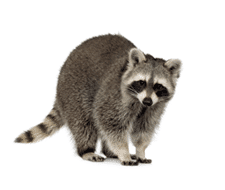
Raccoons
Raccoons measure between 41 and 71 cm, not including the tail which can measure between 19.2 and 40.5 cm. The most characteristic physical feature of the raccoon is the area of black fur around the eyes which contrasts sharply with the surrounding white face coloring.
Pest problems? Contact our Pest Professionals for a FREE quote today!
What is the Raccoon's Diet?
The raccoon diet consists of many different types of food. While its diet in spring and early summer consists mostly of insects, worms, and other animals available early in the year, it prefers fruits and nuts. Acorns and walnuts (which emerge in late summer and autumn) represent a calorie-rich food source for building up fat needed for winter.
What is the Raccoon's Reproductive Cycle?
Raccoons usually mate between late January and mid-March, triggered by increasing daylight. During the mating season, males roam their home ranges in search of females in an attempt to court them during the three-to four-day-long period when conception is possible. Mating can last over an hour and is repeated over several nights.
Where do Raccoons Live?
Raccoons are most active at night and only travel where food is available. The adult male only travels in about a one-mile diameter. Adult females and their young inhabit smaller areas. Raccoons will den in abandoned buildings, old beaver lodges or bank dens, car bodies, wood piles, abandoned coyote dens, chimneys and haystacks. If you encounter a raccoon during the day and it doesn’t seemed frightened by you, it could have rabies and should be reported to local animal control.
Ready to Schedule a Service?