How to Set a Mouse Trap (and Catch Mice Successfully)
As the colder months settle in and the holiday season approaches, there’s nothing quite like staying warm and cozy in the comfort of your own home. Unfortunately, you’re not the only one with that idea. House mice are also looking for shelter from the cold, and your home could be just the place they’re looking for.
Finding a mouse scurrying across your kitchen or droppings in your garage is enough to send you reaching for a mousetrap. But setting one up doesn’t guarantee a catch.
Without knowing a few tricks of the trade, you could find yourself checking the same empty trap day after day while mice continue enjoying their rent-free holiday accommodation.
How to Set a Mouse Trap: Step by Step
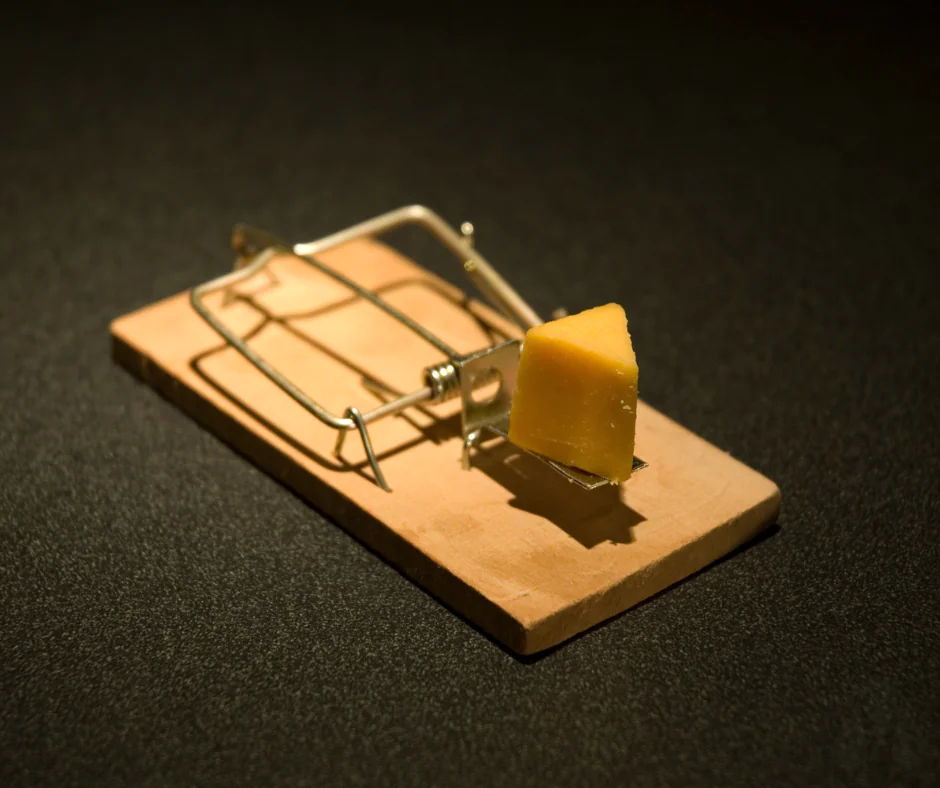
If you’re wondering how to set a mouse trap, chances are you have one of those traditional wooden snap traps. These traps use a spring-loaded metal bar that snaps shut when a mouse disturbs the trigger.
The exact setup can vary across brands and models, but most traditional wooden snap traps follow these steps:
- Prepare the trap. Place the trap on a flat, stable surface with the spring-loaded bar in its resting position. Familiarize yourself with the bait pedal, metal bar, and holding rod before attempting to set it.
- Apply the bait. Place a pea-sized amount of peanut butter on the trigger pedal. Other proven mouse baits include chocolate and sunflower seeds.
- Pull back the snap bar. Pull the spring-loaded metal bar back toward the end opposite the bait pedal and hold it firmly in place. Important: Keep your fingers away from the bar’s snapping path.
- Secure the holding rod. While holding the snap bar back, lift the thin metal holding rod over it and secure its end in the notch or catch on the trigger pedal.
- Release the bar. Slowly ease your grip on the snap bar, keeping your fingers clear of its path, until the holding rod takes the tension and holds the bar in place.
- Place the armed trap perpendicular to the wall, with the baited trigger end closest to the baseboard.
Sounds simple enough, right? Mechanically, setting a mouse trap takes less than a minute once you get the hang of it. But there’s a difference between having a trap ready to catch a mouse and actually catching one.
Before you start setting traps around your home, here’s a quick checklist of things you’ll want to have figured out, all of which we’ll cover in more detail later:
- Number of traps to set
- Where to place your mouse traps
- Whether you should prebait your traps
- What foods to use as bait and how much to apply
- How to keep children and pets safe
- Trap inspection and disposal
Different Kinds of Mouse Traps
Snap Traps
Snap traps are the classic, old-school mousetraps most people are familiar with, traditionally featuring a wooden base and a spring-loaded metal bar.
When an unsuspecting mouse goes for the bait, it triggers the mechanism, and snap! The metal bar comes down on the mouse before it knows what hit it.
Manufacturers have introduced a few improvements to the traditional design, for example:
- Plastic snap traps. Instead of a wooden base and metal bar, these use a plastic base and spring-loaded jaws. Many models also feature press-to-set mechanisms (e.g. Tomcat’s Press ‘N Set), so you can arm them with a simple push or squeeze.
- Enclosed snap traps. These keep the snapping mechanism inside a plastic casing, with openings that allow mice to enter and reach the bait. Depending on the model, you can arm the trap by pressing a lever or squeezing the housing, without having to touch the snapping mechanism directly.
Since classic wooden models leave the spring-loaded bar exposed, there’s always the risk of curious children or pets setting it off and getting an unpleasant surprise of their own. Some newer designs help reduce this risk by keeping the mechanism enclosed, though you should still keep all mousetraps well out of their reach.
Glue Traps
Glue traps, also called glue boards, are flat pieces of cardboard or plastic coated with a strong adhesive that immobilizes mice when they step onto the surface. To set one, simply peel off the protective covering and place the board along a wall or another area where mice frequently travel.
They’re cheap, require no bait, and take just seconds to deploy, yet a single board can catch multiple mice at once. It’s no wonder why many homeowners wouldn’t think twice about grabbing one off the shelf.
Despite this convenience, glue traps have long held a reputation for being inhumane, as they leave mice struggling desperately to free themselves. In their attempts to escape, mice may tear their skin, break their limbs, or eventually suffocate.
Perhaps an even stronger criticism, one that prompted a proposal to ban glue traps in New Hampshire, is that other mammals and birds can also fall victim to traps that weren’t meant for them. Once an animal gets stuck, it’s extremely difficult to free it without causing further injury.
Live Traps
Live traps allow you to catch mice without killing them and release them afterward. There’s plenty of variation in terms of the mechanisms used, but generally speaking, they consist of a plastic or metal enclosure with a door that automatically shuts once a mouse takes the bait.
Unless you’re willing to drive miles away to free the captives, we wouldn’t recommend this option. Releasing them near your property may simply bring them right back into your home or cause problems for your neighbors.
High-Voltage Traps
High-voltage traps, commonly called electronic mouse traps, use an electrical shock to kill mice once they enter an enclosed chamber. It’s as simple as placing the bait inside the compartment, closing the lid, and switching the device on (via battery or outlet).
These traps are something you might consider if you don’t want to see or touch a dead mouse when disposing of it, though they’re on the pricier end of the mouse trap spectrum.
Smart Mouse Traps
Smart mouse traps are a notch up from traditional traps in that they use sensors and wireless connectivity to monitor rodent activity and send real-time alerts when a mouse is caught.
Some models connect to a smartphone app, while more advanced systems allow pest control professionals to track activity across multiple traps remotely. Either way, there’s less guesswork involved, and you won’t have to keep checking empty traps on a daily basis.
At Modern Pest, we use Anticimex SMART, a rodent monitoring and control system that goes beyond individual snap traps and operates 24 hours a day, 365 days a year.
It helps our technicians identify areas with high mouse activity, allowing us to determine the best locations for SMART Snap traps. The entire process is hands-off for you, as our team handles everything from trap placement and monitoring to removing and disposing of captured mice.
What Are the Best Baits for Mouse Traps?
Peanut butter is one of the most popular mouse trap baits, and that’s probably because it works so well. In fact, a 2026 study published in Scientific Reports found that peanut butter consistently outperformed several commercially manufactured mouse attractants in field trials.
Its strong aroma and high fat content make it an enticing treat for hungry mice. At the same time, its sticky consistency makes it harder for them to grab a quick bite without disturbing the trap’s trigger.
Other baits that may work include chocolate, seeds and nuts (e.g., sunflower seeds, birdseed, and crushed nuts), and dry dog or cat food. As for cheese? Well, that’s one cartoon myth you shouldn’t take too seriously. Mice will still eat it, sure, but whenever possible, reach for peanut butter instead or chocolate if you have peanut allergy concerns
A pea-sized amount of bait is enough for a mouse trap. Pile on too much peanut butter, and a mouse may be able to nibble at the excess without putting enough pressure on the trigger to set it off. Free dinner for your unwanted guest!
Where Should You Place Mouse Traps?
To improve your chances of catching mice, you need to be strategic about where you place your traps. That starts with understanding their behavior. Where do they like to hang out? What routes do they take around your home?
Mice prefer to fly under the radar (crawl, technically) to stay out of predators’ sight, and so they tend to stick close to walls rather than venture into open spaces. Warmth is also a big attractant, especially when temperatures start dropping outside.
With these behaviors in mind, some of the best places to set mouse traps around your home include:
- Behind refrigerators and ovens
- Along walls and baseboards
- Under kitchen cabinets and sinks
- Inside attics, garages, and storage areas
- Behind furniture and appliances
- Near stored belongings, such as boxes of holiday decorations, old clothes, and other materials mice may use for nesting
If you find yourself short on traps, prioritize areas with signs of high mouse activity.
Small, dark, pellet-shaped droppings, gnaw marks on food packaging, and greasy rub marks along baseboards are all telltale signs. And since mice may stay within a 20-foot radius of their nests when food and shelter are readily available, concentrating your traps in these areas can work in your favor.
Beyond catching mice, proper trap placement is also a matter of safety. Think twice before setting exposed snap traps in living rooms or other areas where curious toddlers and pets can easily reach them. Penn State Extension recommends removing traps during the day and putting them back at night, when mice are more active.
How Many Mouse Traps Should You Set?
The number of mouse traps you’ll need depends on how bad the infestation is and where mice are most active around your home. There’s no magic number that works for every situation.
However, the University of California’s Integrated Pest Management Program offers a useful rule of thumb:
- Space traps no more than 10 feet apart along walls.
- Set traps in pairs, about 1 to 2 inches apart. This arrangement can improve your chances of catching mice that might otherwise jump over a single trap.
To put those numbers into perspective, let’s say you have a 25-foot stretch of wall in your two-car garage. Using the guidelines above, you might set up three pairs of traps, or six individual traps, spaced roughly 10 feet apart along that route.
Six traps for just one section of your garage might sound like overkill, but it’s a fairly conservative approach if you want to catch mice quickly rather than rely on one or two traps and hope for the best.
If you’re keen on bringing that number down, consider having a professional rodent control service inspect your home. They can identify where mice are most active and determine how many traps you actually need and where to place them.
If Your Traps Aren’t Catching Any Mice, Here’s Why…
You’ve set your traps, picked the right bait, and placed them on optimal routes. And yet, days have passed, and you haven’t caught a single mouse. Below are possible explanations and what you can do about them.
You Might Be Dealing With Rats Instead
Mice are generally neophilic, meaning they’re naturally curious about unfamiliar objects. Rats, on the other hand, tend to be neophobic, or wary of anything new in their environment. As a result, they may initially avoid newly placed traps.. It can take several days for them to grow comfortable with these changes.
Look for other clues that might suggest you’re dealing with rats rather than mice. Rat droppings are larger, often measuring around half an inch or more. Larger gnaw marks may also point to rats. If these signs sound familiar, switch to appropriately sized rat traps.
Your Traps Are in the Wrong Places
Mice don’t always follow the routes you anticipate them to take. If your traps remain untouched after several days, try relocating them to areas with fresher signs of activity. Look for new droppings or recently gnawed food packaging.
Mice Have Become Trap-Shy
A mouse that has narrowly escaped a trap may learn to avoid it. Pest control professionals call this trap shyness, a learned reluctance to approach a device after a frightening encounter.
One way to overcome this behavior is through prebaiting. Leave a small amount of food on an unset trap for a few days so the mouse can feed without triggering it. Once the bait is being taken regularly, arm the trap.
Your Traps Need Cleaning
Mice can release alarm pheromones, which are chemical signals that warn other mice of potential danger. If a mouse has previously been caught in your trap, lingering odors from that encounter could make other mice more reluctant to approach it.
So, make it a habit to check your traps at least once daily, preferably in the morning after mice have been active overnight. Remove any captured mice and clean the traps before reusing them, following the CDC’s guidance on cleaning and disinfecting rodent traps.
Mouse Traps Are Only Part of the Solution
Mouse traps can work remarkably well when set correctly, but catching a mouse doesn’t necessarily mean you’ve solved the infestation. There could be more hiding around your home, and unless you address what’s attracting them and how they’re getting inside, you may find yourself setting traps again and again, in an endless cycle.
At Modern Pest, we take an Integrated Pest Management (IPM) approach that goes beyond mouse trapping. Our technicians inspect your home to identify signs of mouse activity, locate entry points, and recommend exclusion measures to help keep rodents out for the long haul.
Combined with targeted trapping and ongoing monitoring, our goal is to put an end to your mouse problem and protect your family from the health risks posed by rodents. Call Modern Pest at (800) 323-7378 or contact us online to get started.