
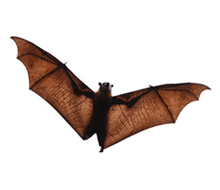
Bats
Bats are usually brown with dark hairs at the base. Their wings and interfemoral membranes are black. Their colors vary from light in deserts to dark in forests. Length is 110-130 mm; weight is 13-18 g. They do not have fur on their wings or interfemoral membrane.
Modern’s Wildlife Team is committed to resolving your nuisance wildlife issues as quickly, humanely and safely as possible. Contact our Pest Professionals for a FREE quote today!
What is the Bat's Diet?
Although various bat species eat different kinds of food, the vast majority consume a variety of insects such as moths, beetles, gnats, and crickets.
What is the Bat's Reproductive Cycle?
Most bats have a breeding season, which is in the spring for species living in a temperate climate. Bats may have one to three litters in a season, depending on the species and on environmental conditions such as the availability of food and roost sites.
Where do Bats Live?
Some bats prefer to roost in barns, attics, caves or abandoned mines, those shelters providing safety from predators, protection from fluctuations in weather, and seclusion for rearing the young. Other species select hollow trees or rock crevices as their daytime resting site, while certain ones are known to roost in exposed locations, clinging to tree trunks or hanging upside down from tree branches.
Why are Bats a Pest?
Bats are certainly a beneficial part of nature. However, if they invade your home, bats defecate, soil and tear up insulation or bring in parasites like mites, fleas and ticks. Solving a bat problem is no easy task. Trained experts are equipped with the knowledge and tools to safely and humanely remove the bats, which is done through a process called exclusion.
Ready to Schedule a Service?