
How to Keep Rats Away From Bird Feeders
Watching birds gather around a backyard feeder is one of those one-of-a-kind relaxing pleasures, especially for bird enthusiasts hoping to spot a species they’ve never seen before. It’s no wonder that around 96 million Americans participate in birding, spending billions of dollars each year on the hobby.
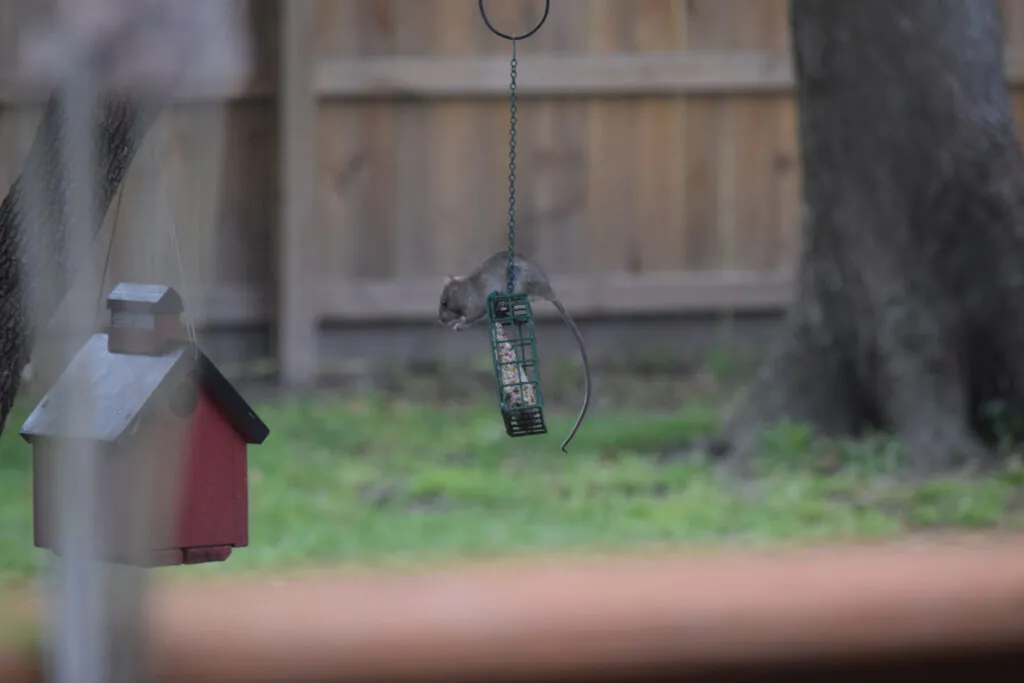
Unfortunately, bird feeders don’t just attract colorful visitors. They also attract rats and mice looking for a predictable source of food. Once they discover a steady supply of birdseed, they can keep returning, reproduce at an astonishing pace, and bring along the diseases and property damage that make rodents such unwelcome guests.
The good news is that you don’t have to stop feeding the birds to keep rodents out. This guide explains how to keep rats away from bird feeders so you can continue enjoying your feathered visitors without turning your yard into a feeding ground for rodents.
Why Do Bird Feeders Attract Rats?
Bird feeders attract rats for the same reason they attract birds: they’re packed with calorie-dense food. Seeds such as sunflower, millet, and corn contain carbohydrates, fats, and proteins, giving rats plenty of energy in a relatively small meal.
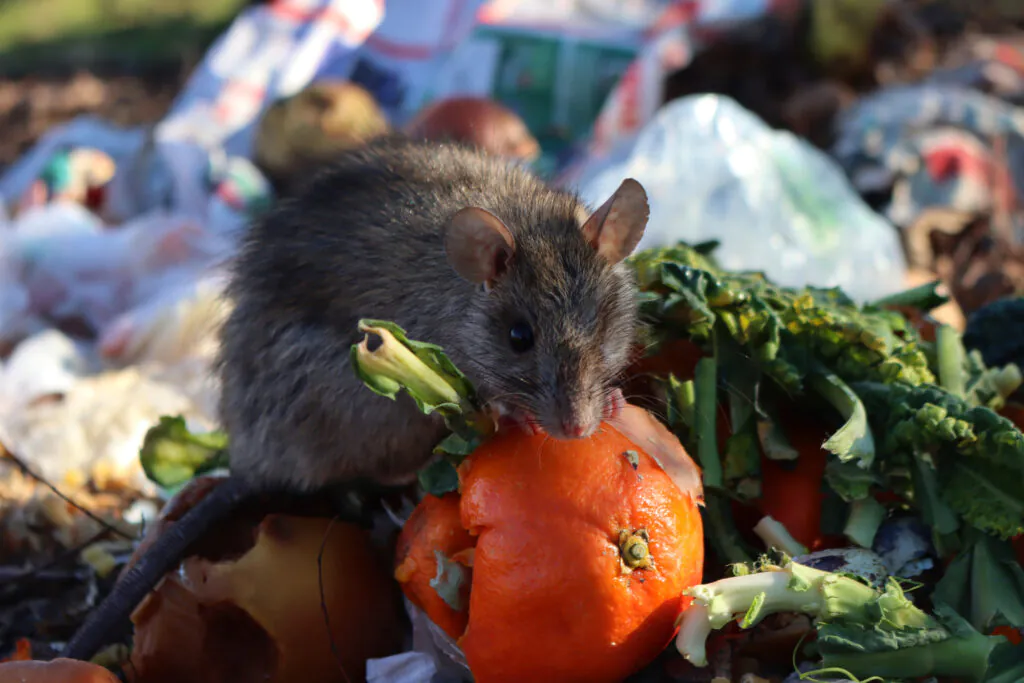
From a rat’s perspective, birdseed isn’t much different from fruit scraps in an open compost pile or leftover food inside an unsecured garbage bin. Being the opportunistic feeders they are, they’ll happily take advantage of this readily available source of calories.
Then there’s convenience. As Dr. Dana Sanchez, Wildlife Specialist with Oregon State University Extension, explains, “Commercially sold ‘wild bird seed’ mixes often contain a lot of fillers… so a lot of it gets kicked out on the ground… The discard also can turn into a food opportunity for rats.”
If food appears in the same place day after day, rats quickly learn (they’re surprisingly intelligent creatures!) that your feeder is a dependable place to return for another meal.
How to Keep Rats Away From Bird Feeders
Mount the Feeder on a Freestanding Pole
The easiest way to keep rats away from birdseed is to make it difficult to reach in the first place. Mount the feeder on a freestanding pole instead of using ground-level platform feeders or trays, where food is already within easy reach.
Choose a smooth metal pole over square-cut wooden posts or trees. Rats are exceptional climbers, but smooth metal makes it much harder for them to gain a foothold than rough wood.
And contrary to popular advice, don’t grease poles. As Lisa Pennisi and Stephen M. Vantassel explained in a University of Nebraska–Lincoln Extension publication, “Greasing a pole is ineffective as the grease becomes tacky with time allowing for easier climbing.”
Install a Baffle
Baffles are installed beneath the feeder on the pole, creating an overhanging surface that blocks rats, squirrels, and other climbing wildlife from accessing birdseed.
These barriers come in cone, dome, or cylindrical designs. Any of the three can be effective when installed properly, but choose one that’s made from smooth metal or another slick material that rodents can’t easily grip with their claws.
Eliminate Alternative Climbing Routes
Overhanging branches, roof eaves, fences, dense shrubs, and nearby sheds can all serve as easier routes to the bird feeder than climbing the pole itself. Thus, installing a baffle becomes a futile upgrade if rats can simply bypass it.
With that in mind, mount the feeder at least 4 feet above the ground and keep it at least 8 feet away from the mentioned climbing points. Rats will try as hard as they can to avoid exposing themselves in such an open area where they’re more likely to be spotted by people and birds of prey.
Add a Seed Catcher Under the Feeder
As birds feed, some seed will inevitably end up below as a mix of whole seeds, partially eaten seeds, and empty hulls. Ground-feeding birds such as doves and sparrows will certainly take advantage of this easy meal, though they won’t clean up every last seed. Those leftovers then become food for rats once night falls.
A seed catcher installed beneath the feeder helps catch much of this spilled seed before it falls.
You can also opt for no-mess or waste-free birdseed blends, which contain shelled or hulled ingredients. Birds leave behind far less waste, leaving your seed catcher with a much more manageable amount to catch.
If you’re feeding finches or other small seed-eating birds, Nyjer seed is also a good option. It’s dispensed through specialized feeders that minimize spillage.
Clean Up Edible Wastes Regularly
Despite its name, a seed catcher doesn’t catch everything. So, make a habit of sweeping or raking up any edible seed left beneath the feeder. While you’re at it, clean away accumulated bird droppings as well to keep the feeding area more sanitary.
Bring Feeders Indoors Before Nighttime
Many homeowners leave their bird feeders outside around the clock without much trouble. However, if your feeder has to hang from a tree or sit near rat climbing points, we recommend bringing it indoors before dusk and putting it back out the following morning.
Sure, it adds one more chore to your routine, but it also removes a reliable food source during the night when rats are most active. The less your property rewards them night after night, the less reason they have to establish nests nearby and raise young.
Don’t Overfill Your Bird Feeder
Filling your bird feeder to the brim might seem like a generous thing to do, but chances are the birds won’t finish it all. Speaking on the Joe Gardener Show, National Wildlife Federation naturalist David Mizejewski explains, “Birds only use feeders as a supplement to the natural foods that they’re finding in the landscape. So they only ever use it as a snack.”
To rats, any leftover seed sitting above is a prize worth returning for night after night until they find a way to reach it. This being the case, just keep it about three-quarters full, then adjust from there based on how much seed is left over.
Use Hot Pepper-Treated Birdseed
Like humans, rats have foods they’d rather avoid, and spicy is high on that list. That’s why hot pepper-treated birdseed can work. Birds can happily eat capsaicin-treated seed without experiencing the burning sensation mammals, including rats, do. If some seed ends up on the ground, it’s far less likely to tempt hungry rodents.
Some homeowners also sprinkle cayenne pepper around the feeding area, though rain and wind quickly reduce its effectiveness. If you don’t mind reapplying it regularly, it’s a reasonable DIY approach. Just do so with caution, as loose pepper powder can irritate the eyes, nose, and skin.
Store Birdseed in Secure Containers
Most commercial birdseed comes in paper or thin plastic bags, so it’s never a good idea to leave them sitting just anywhere. They’re hardly a challenge to a rat’s teeth and claws.
Instead, transfer the birdseed into a sturdy metal container with a tightly fitting lid. A heavy-duty plastic container can also work, provided it’s thick enough to resist gnawing and the lid seals securely. Keep the container closed whenever you’re not refilling the feeder, clean up any spilled seed, and place the container on a shelf rather than directly on the floor.
Use Rat-Repellent Plants Around Your Yard
Mint, spearmint, and citronella are popular choices if you’re looking for natural rat repellents that also add a bit of greenery around your home. However, don’t count on plants alone. A hungry rat won’t think twice about pushing past them if it knows there’s food nearby. They’re best used as a complement to other rodent-proofing measures we tackled earlier.
What to Do If Rats Keep Coming Back to Your Bird Feeder
If rats keep returning despite your best efforts, you may be dealing with a lot more than the one or two you’ve seen scurrying near your bird feeder. Believe it or not, their numbers can explode surprisingly quickly.
For example, Norway rats, the most common rat species across New England, can produce up to seven litters a year, with around 6 to 12 pups per litter. Now multiply that by several breeding females (remember that pups can begin reproducing themselves in as little as two to three months), and you’ve got a rat population that would make anyone’s skin crawl.
As you can see, rodents are not something to take lightly. The sooner you act, the easier they are to bring under control. Here’s what you can do.
Temporarily Stop Feeding the Birds
As enjoyable as bird feeding can be, you may need to temporarily stop altogether if rats continue showing up. Taking the feeder down removes one food supply at a time and forces rats to look elsewhere for their next meal.
Set Rat Traps Along Their Travel Routes
Rats tend to follow familiar routes, often hugging walls, fences, dense vegetation, and other forms of cover rather than crossing exposed spaces. If they’ve been visiting your bird feeder repeatedly, look for the paths they may be using to get there and place snap traps along those routes.
Don’t be surprised if a newly placed trap goes untouched at first. Rats exhibit neophobia, which is essentially a wariness of unfamiliar objects in their environment. One approach is to pre-bait an unset trap for a few nights so rats become accustomed to feeding from it before you actually set it.
Call a Professional Rodent Control Service
If you’ve removed accessible food, cleaned up the yard, and rodent-proofed your bird feeder but still keep seeing rats, the problem may no longer be confined to the backyard.
Rats can spend days hidden behind basement walls, attic insulation, or beneath floors, where they’re difficult to reach and unpleasant, not to mention risky, to deal with yourself.
That’s where professional rodent control can save you a great deal of time and hassle. At Modern Pest, we don’t just eliminate visible rats. We locate nesting areas, seal entry points to keep new rodents from getting inside, remove carcasses when needed, and use our Smart Electronic Rodent Control System to continuously monitor rodent activity.
Call Modern Pest today at (800) 323-7378 or request a free quote online to schedule your rodent inspection.
FAQs
Is There a Way to Feed Birds Without Attracting Rats?
You can’t completely eliminate the risk, but you can reduce it substantially. Use a freestanding metal pole with a properly installed baffle, choose birdseed that leaves less waste, clean up spilled seed regularly, and remove other food sources such as unsecured trash, compost, and pet food that may be attracting rats to your yard.
Do Coffee Grounds Around Bird Feeders Repel Rodents?
There’s little evidence that coffee grounds reliably repel rats or mice from bird feeders. Even if they dislike the smell, hungry rodents can ignore odors when a dependable food source is nearby. Thus, physical barriers and removing spilled seed are more reliable.
Can Rats Climb Bird Feeder Poles?
Yes. Rats can climb wooden posts, trees, and many textured poles, which is why simply elevating a bird feeder isn’t enough. A smooth freestanding metal pole fitted with a baffle makes the climb much more difficult.