
76% of Homeowners Encounter “Mystery Pests”— Identify the Signs
Have you ever spotted droppings, scratch marks, chewed wires, or other suspicious signs in your home and wondered what caused them? You’re far from alone. More than 3 in 4 homeowners have encountered signs of a pest they couldn’t immediately identify.
To find out how well Americans can recognize common pest problems, we surveyed 1,003 homeowners about their experiences and put their pest identification skills to the test. From droppings and eggs to structural damage, here’s how to identify common signs of pests in your home.
The Majority of Homeowners Fail to Identify Basic Signs of Pest Infestations
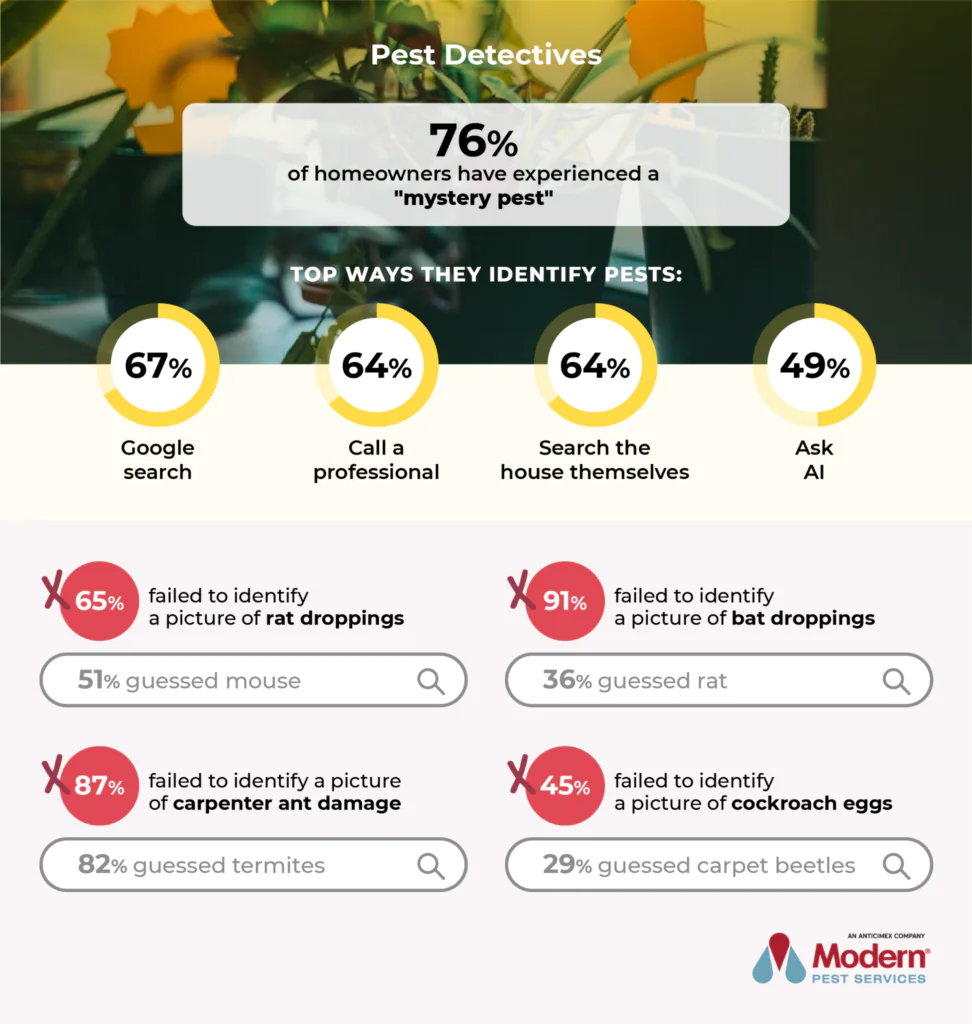
Most Americans have experienced a mystery pest in their home, and they’re taking a multipronged approach to getting to the bottom of it. Most (67%) turn to Google searches, 64% call a professional, and another 64% search the house themselves. AI is becoming another resource, with nearly half (49%) using it to help identify pests.
We also asked respondents to identify signs of pests based on pictures, which can look very similar across species. The results showed that most couldn’t guess correctly without researching.
65% failed to identify rat droppings
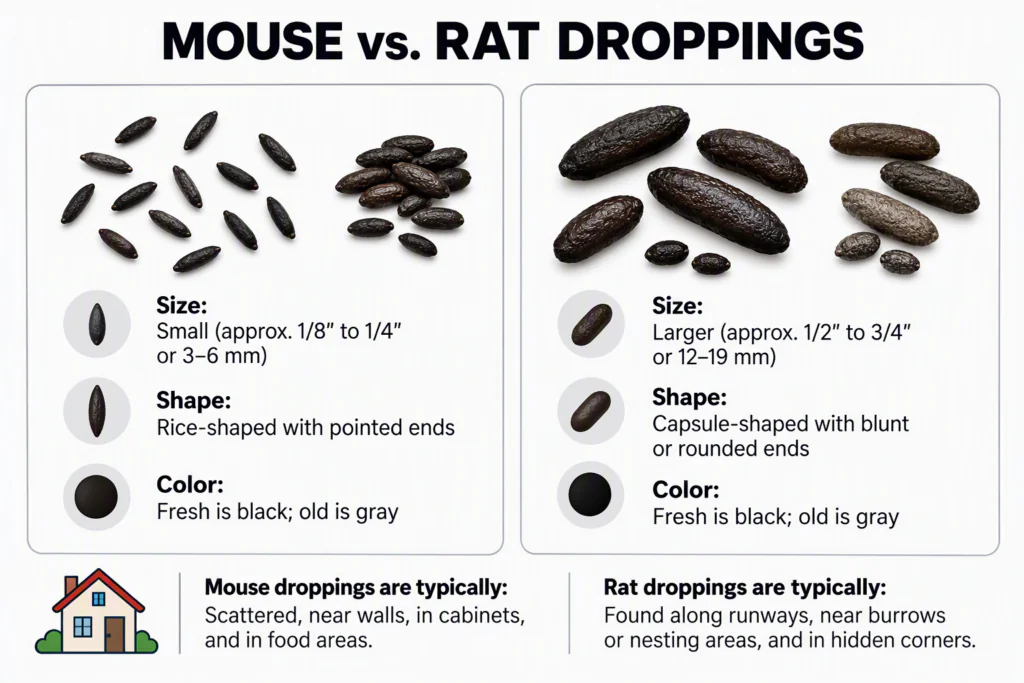
Rat droppings are typically larger than mouse droppings with a different shape. Mouse droppings are smaller and more slender, often with pointed ends. Despite the differences, 51% mistook rat droppings for mouse droppings.
“If you find rodent droppings, never sweep or vacuum them dry, as this can launch dangerous bacteria into the air,” advises Dan Smith Field Specialist at Modern Pest Services. “Instead, put on gloves, spray the area thoroughly with a disinfectant or bleach solution, let it sit for five minutes, and wipe it up with paper towels. Just remember: cleaning the droppings only handles the symptom. To stop the infestation at its source and seal up entry points, you’ll want to bring in a professional.”
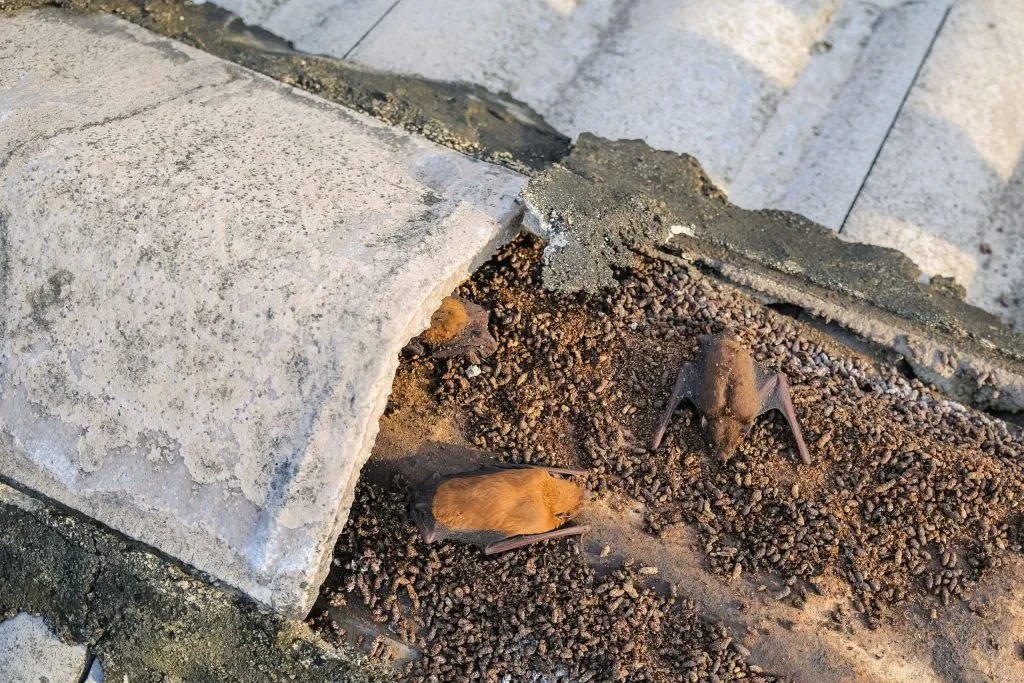
91% failed to identify bat droppings (guano)
Alt text: Bat droppings – Modern Pest Services
Bat droppings, also known as guano, are typically dark, elongated, and segmented. They tend to be dry and crumbly because they contain fragments of insects. More than a third (36%) mistook bat droppings for rat droppings, which can be similar in size but are generally firmer and less crumbly.
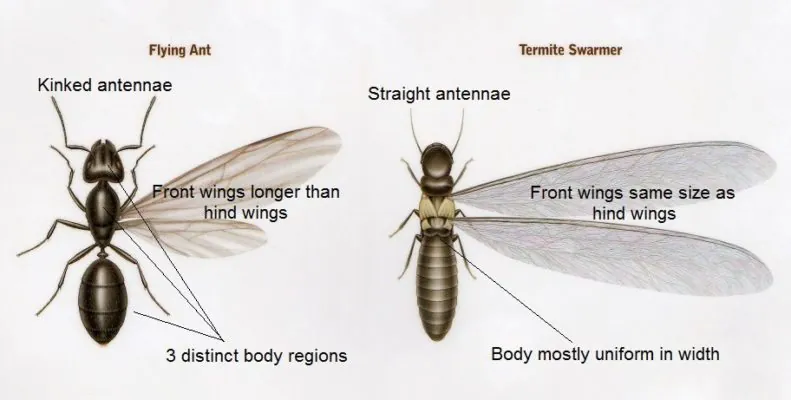
87% failed to identify carpenter ant damage
Alt text: Carpenter ants vs. termites – Modern Pest Services
Carpenter ants excavate wood to build their nests, leaving behind smooth, clean tunnels and sawdust-like material known as frass. Termites, on the other hand, consume wood and can leave behind rougher galleries that may contain soil or mud. More than 8 in 10 homeowners (82%) mistook carpenter ant damage for termite damage.
45% failed to identify cockroach eggs
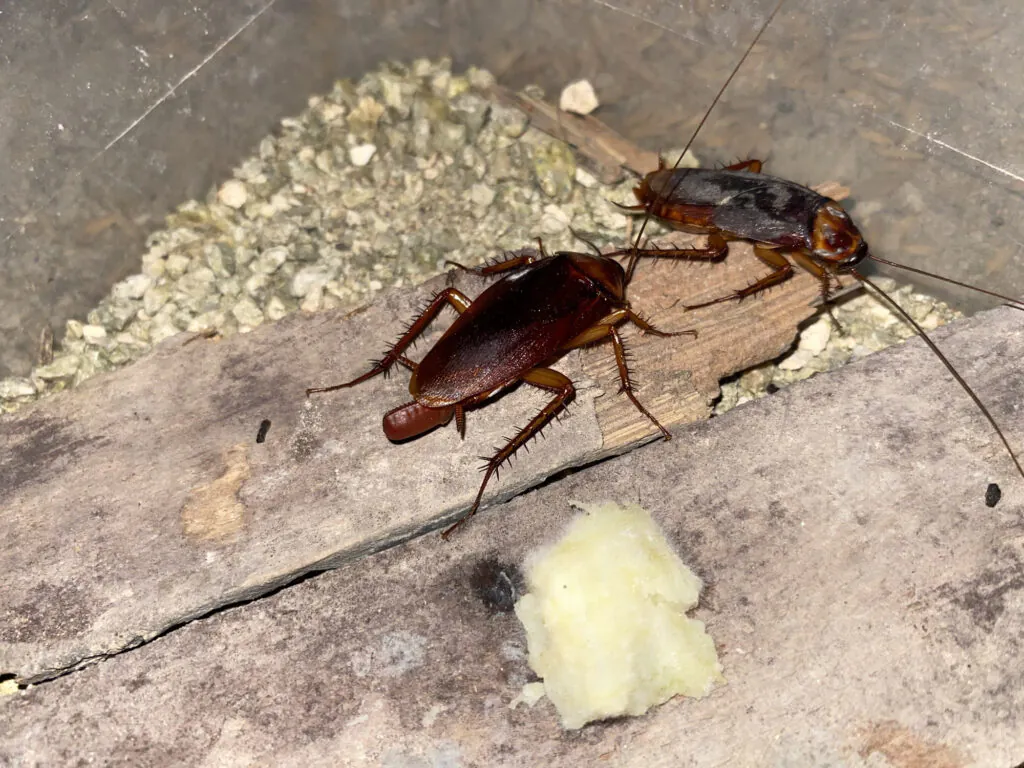
Cockroaches lay their eggs inside small protective cases called oothecae, which typically look like brown or reddish-brown capsules with ridges along the surface. Nearly 3 in 10 homeowners (29%) mistook cockroach egg cases for carpet beetle eggs, which are much smaller and typically white or cream-colored.
Kitchens are the Resounding Hot Spot for Pest Clues
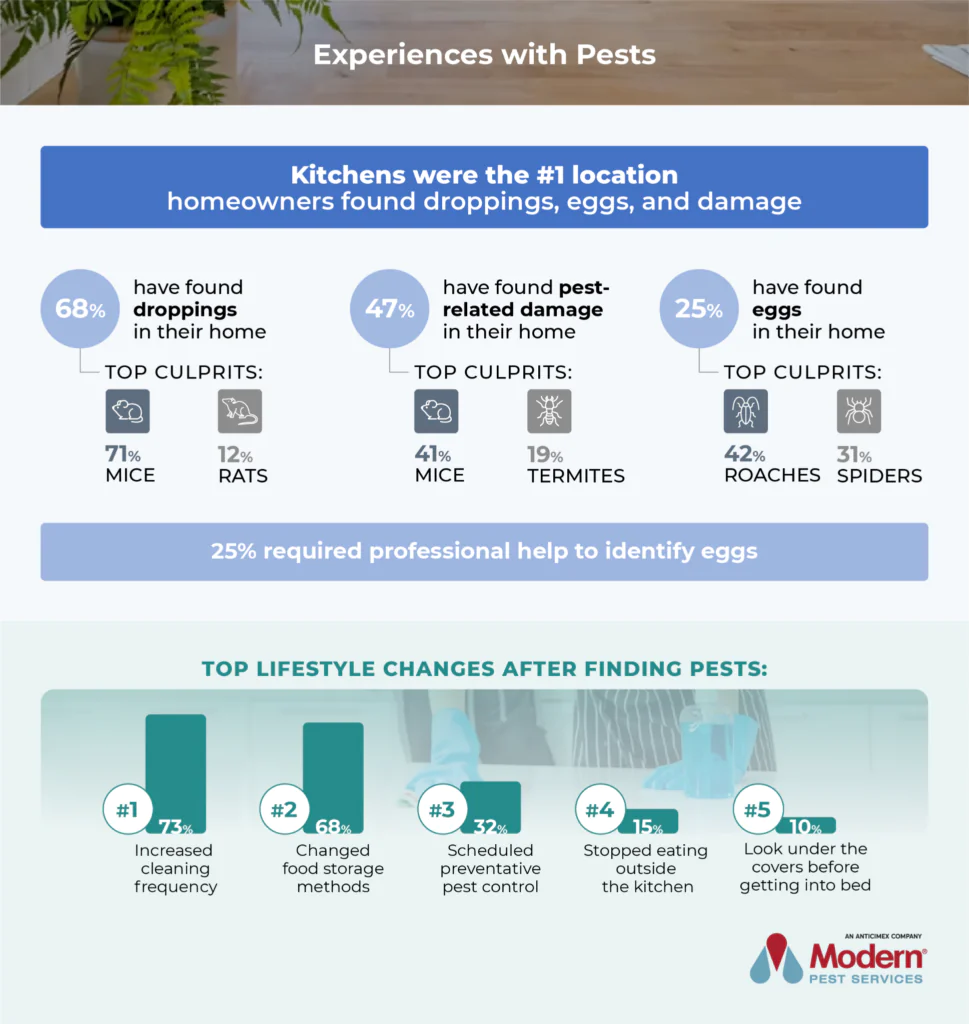
When asked where homeowners found droppings, eggs, and other damage (like chewed wires), kitchens were the top answer across the board:
- 56% of those who found droppings discovered them in the kitchen
- 37% of those who found eggs discovered them in the kitchen
- 32% of those who found pest damage discovered it in the kitchen
Droppings were by far the most common clue. More than 2 in 3 homeowners (68%) have found pest droppings in their home at some point, most commonly from mice (71%) or rats (12%).
Pest-related damage was also relatively common, with 47% of homeowners reporting signs such as chewed wires or structural damage. Mice were the most frequently identified culprit (41%), followed by termites (19%).
Pest eggs were less common, and often harder to identify. A quarter of homeowners have found eggs in their home, usually from cockroaches (42%) or spiders (31%). Among those who encountered eggs, 25% needed professional help to determine what they had found.
Signs of pests cause permanent lifestyle changes for homeowners
For many homeowners, finding evidence of pests also prompted permanent changes around the house. The top lifestyle adjustments included:
- Increased cleaning frequency – 73%
- Changing food storage methods – 68%
- Scheduling preventative pest control – 32%
- Stopping eating outside the kitchen – 15%
- Looking under the covers before getting into bed – 10%
1 in 10 Delayed Calling Pest Control Due to Embarrassment
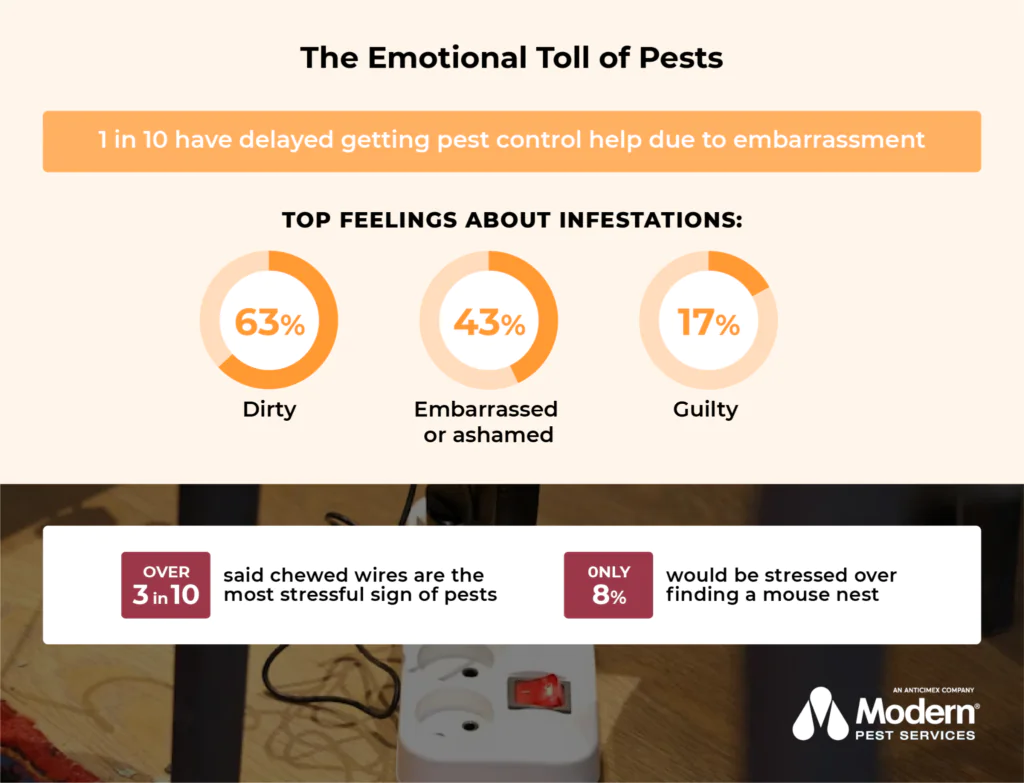
Pests can happen to anyone, and with the right pest control service you can remediate most issues easily. Nearly a third of homeowners (31%) adopt this healthy mindset, reporting no emotional changes after finding pests.
However, the majority report feelings of dirtiness (63%) or embarrassment/shame (43%). 1 in 10 even delayed getting pest control help due to embarrassment. Another 17% report feelings of guilt.
Some pest clues are also more stressful than others. Chewed wires topped the list, with 31% of homeowners saying they would find them the most stressful sign of a pest problem. Comparatively, just 8% said discovering a mouse nest would cause them the most stress.
“We visit spotless homes every single day that have pest issues—there is absolutely nothing to be embarrassed about,” notes Dan Smith/Field Specialist. “Delaying treatment only gives pests more time to multiply and cause damage. With the right professional help, an infestation is just a temporary, fixable roadblock, not a permanent problem.”
Finding Signs of Pests in Your Home?
Keep in mind that pest droppings and other waste can carry harmful bacteria, viruses, and other contaminants. Avoid touching, sweeping, or vacuuming suspected pest waste, keep children and pets away from the area, and contact a pest control professional for guidance on safe cleanup and removal.
If you’ve noticed droppings, chewed wires, egg cases, or other unexplained signs in your home, reach out to Modern Pest Services for residential pest control in New England. Our team can accurately identify the pest behind the signs and put together a plan to remove and prevent them from returning.
Methodology
In September 2026, we surveyed 1,003 homeowners across America about their experiences with pests. Ages ranged from 20-75, with an average age of 47. Across respondents, 50% were women, 49% were men, and less than 1% were nonbinary or preferred not to say.
For media inquiries, please reach out to media@digitalthirdcoast.net.
Fair use
When using this data and research, please attribute by linking to this study and citing Modern Pest Services.