
[Survey] The Most Concerning Pests in America & Why They Scare Us
Across the country, pests have a real impact on how people feel in their homes, their neighborhoods, and even their sleep. To better understand the pests that cause the greatest anxiety—and why— we surveyed over 1,000 Americans about their experiences, fears, and the critters that stay top of mind.
Invading our Minds: 74% of Americans are Anxious About Pests
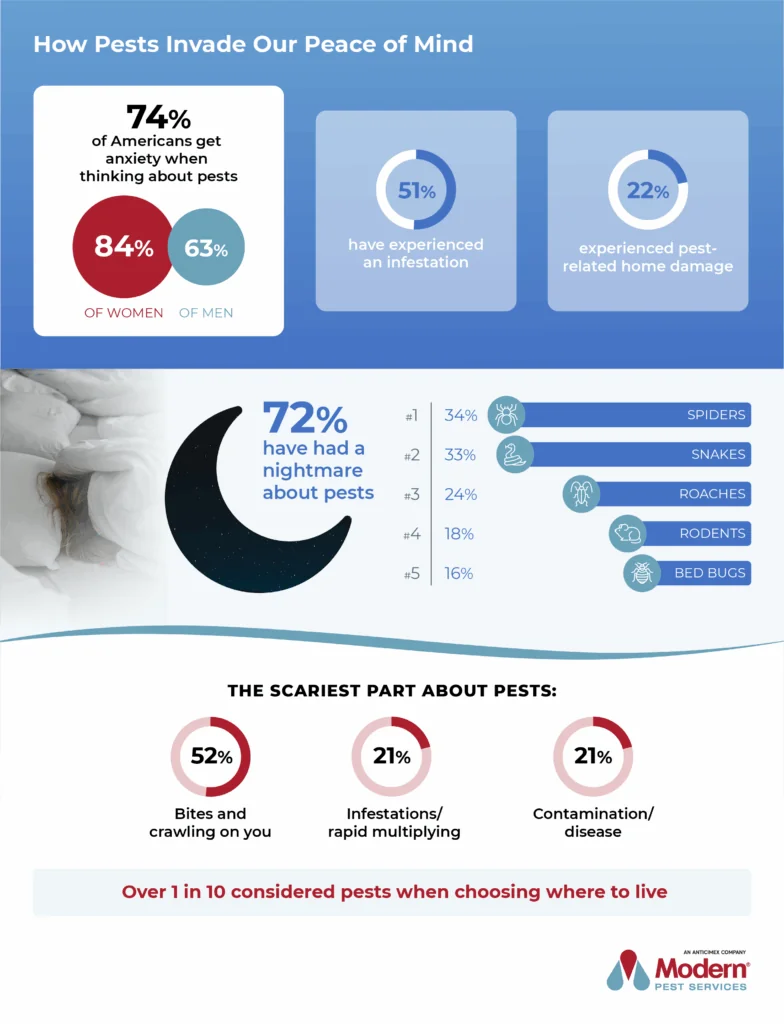
Pest-related fear is widespread, with 74% of Americans reporting anxiety when thinking about them. Women are significantly more likely to experience this anxiety (84%) compared to men (63%). Over 1 in 10 (12%) even considered pests when choosing where to live.
These concerns are grounded in real experiences—over half of Americans (51%) have encountered a pest infestation, and 22% have dealt with resulting home damage.
“Seeing a pest in your home is unsettling—but what you don’t see can be even more dangerous. Rodents often chew through wiring inside walls, creating hidden fire hazards. Rodents and insects can damage and contaminate food supplies. And carpenter ants and termites can weaken structural wood over time. These problems aren’t always visible, but they can compromise your home’s safety.” Dan S. SMART/Field Specialist
Pests can also affect people psychologically. Spiders are the most common source of pest-related nightmares, reported by 34% of Americans. Other frequently dreamed-about pests include snakes (33%), roaches (24%), rodents (18%), and bed bugs (16%).
The Lone Star Tick Outbreak Breeds New Anxieties
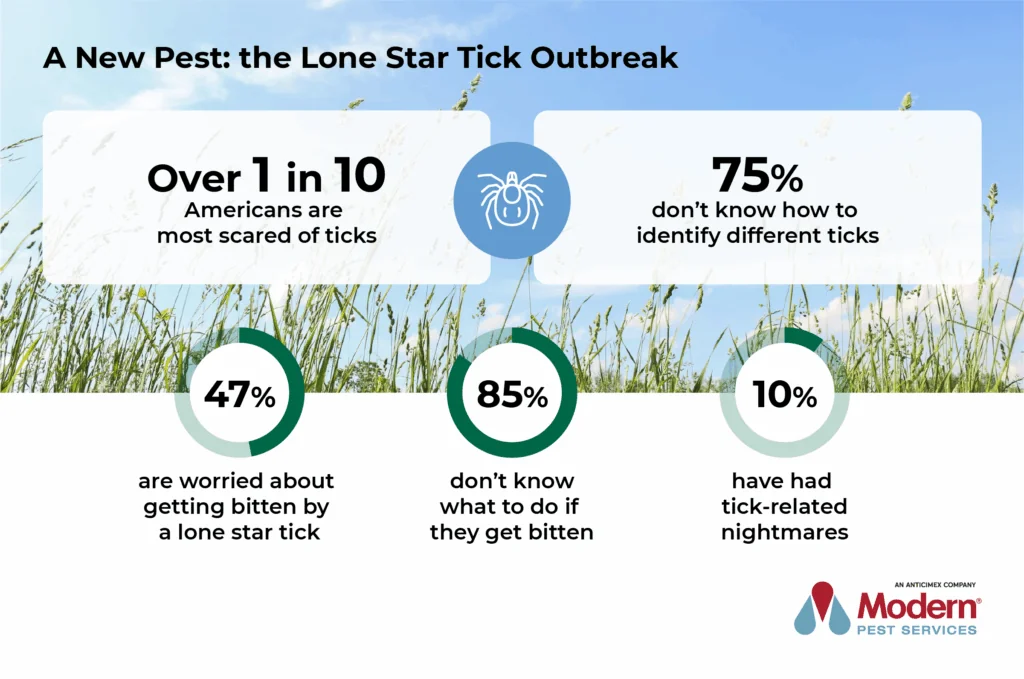
As temperatures rise over time, ticks are creeping their way northward. Our survey found that 13% of Americans identified ticks as their most-feared pest, and 9% reported experiencing tick-related nightmares.
The lone star tick is a particular source of anxiety due to its association with several medical conditions. This species is known to cause alpha-gal syndrome, which can trigger an allergy to red meat and dairy products, as well as other illnesses such as Southern Tick-Associated Rash Illness (STARI), ehrlichiosis, and tularemia.
Maine is now actively tracking the lone star tick as it expands its range northward. State health officials and researchers have ramped up monitoring efforts to document its presence and better prepare the public for the unique health risks this Southern native brings to the region.
Despite these risks, most Americans lack confidence in recognizing different tick species. While 47% say they are worried about lone star tick bites, 75% do not know how to identify ticks, and 85% are unsure of the appropriate steps to take if bitten.
“The most effective defense against ticks is a layered approach—keeping grass trimmed, clearing brush where ticks thrive, and performing regular tick checks on people and pets. Professional treatment is the final and most critical layer. By treating the perimeter and breeding areas of your yard, we can greatly reduce tick populations and help keep your outdoor space safe for your family, pets, and friends.” Dan S. SMART/Field Specialist
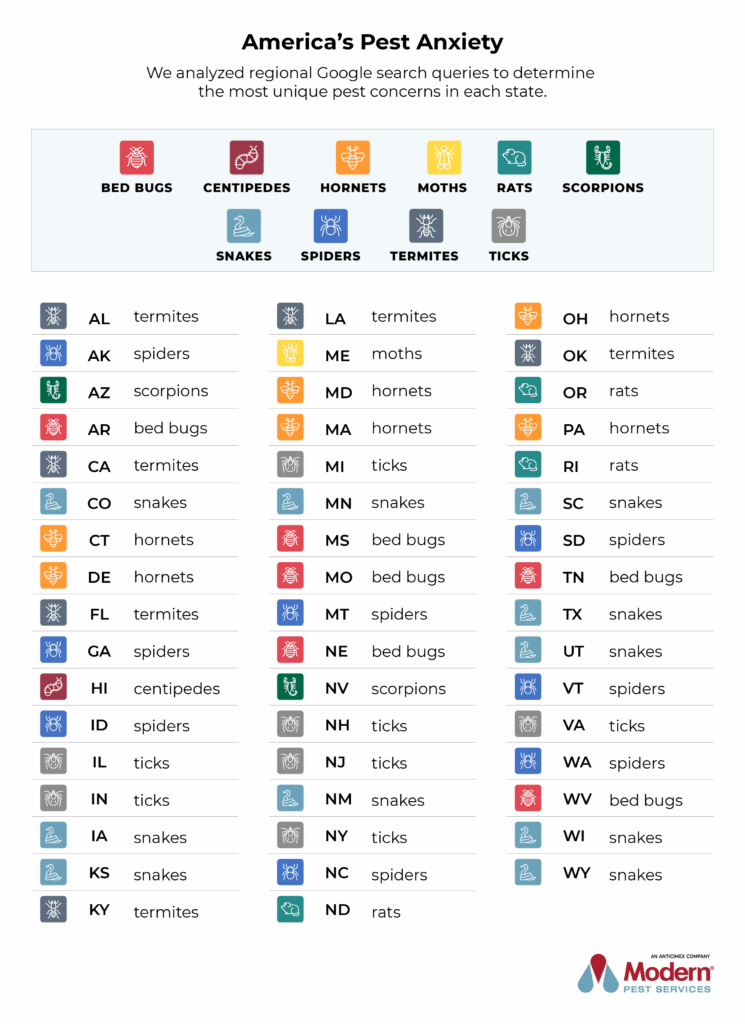
To determine the most concerning pests in each state, we analyzed uniquely popular state-level Google search volume for common pests like rodents, insects, and ticks. Some states, however, reflected concerns that align closely with their local environments—Arizona and Nevada, for example, ranked scorpions highest.
Hawaii stood out as the only state where centipedes topped the list. The islands are home to the venomous Vietnamese centipede (Scolopendra subspinipes), an aggressive species that can reach six to eight inches in length and deliver a painful bite. Centipedes are also known to enter homes regularly, contributing to heightened concern.
Maine was the only state where moths were the most-searched pest. The state has faced recurring issues with nuisance and invasive moth species, including the browntail moth (whose toxic hairs can cause rashes and respiratory irritation) and the spongy (formerly gypsy) moth, which can damage trees, forests, and residential landscaping.
When analyzing overall search volume in America, the most-searched pests across the board were:
- Snakes
- Spiders
- Bed bugs
Smart Solutions to Prevent Pests
While pests are a widespread source of anxiety, there are practical steps homeowners can take to reduce risk and feel more in control. Understanding which pests are common in your region, how they behave, and what early signs to look for can reduce the likelihood of an infestation. When it comes to rodents, one way to take back your peace of mind is with a data-based solution like Anticimex SMART. SMART uses discreet sensors at key entry points to monitor heat and motion 24/7. When activity signals a potential mouse issue, pest control is alerted and responds proactively. This often resolves the problem before homeowners notice anything.
“This technology represents the next evolution in proactively protecting homes from hidden pest damage. We place SMART sensors in high-risk areas such as attics, basements, and utility line intrusions to monitor activity 24/7. If a rodent begins moving into the home, the system immediately alerts us so we can stop the problem early (usually before the homeowner is even aware), seal the entry point, and prevent further damage. We will thoroughly inspect these areas to answer the question of “Why?’. As in, why does this rodent want to be here in the first place. This approach shifts pest control from reacting to damage to preventing it altogether.” Dan S. SMART/Field Specialist
Regular home maintenance also plays a critical role. Simple actions such as sealing entry points, keeping food securely stored, reducing moisture around the home, and scheduling routine inspections can prevent many of the issues that lead to costly or disruptive pest encounters. For emerging threats like the lone star tick, staying informed about prevention methods and bite protocols is especially important.
Methodology
In November 2025, we surveyed 1,003 Americans about pest stressors. Among respondents, 50% were men, 49% were women, and 1% were nonbinary or preferred not to say. Ages ranged from 19 to 74 with an average of 42.
We also analyzed over 8,000 Google search queries related to household pests between November 1st, 2024 and October 31st, 2025.
For media inquiries, please reach out to media@digitalthirdcoast.net.
Fair use
When using this data and research, please attribute by linking to this study and citing Modern Pest.