
Protecting Pets from Household Poisons: What Every Pet Owner Should Know
We’ve all been there: you turn your back for ten seconds, and suddenly your dog is investigating a spilled bottle or your cat is nibbling on a decorative plant. While March is Pet Poison Prevention Month, keeping our companions safe is a year-round job that requires more than just keeping “the bad stuff” under the sink.
To help you protect your furry family members, we’ve put together a deeper look at the risks hiding in your home and a proactive plan to eliminate them.
The “Curiosity Gap”: Why Pets Find Toxins
Pets don’t see a “Danger” label; they see a new scent to investigate or a sweet-smelling liquid to taste. For example, many antifreeze brands have a sweet flavor that is tragically enticing to dogs, while common garden mulch can contain cocoa bean shells that are toxic if ingested.
Knowing the signs is the first step. If you notice symptoms like excessive drooling, lethargy, or a loss of coordination, it is a signal that your pet’s system is already under stress.
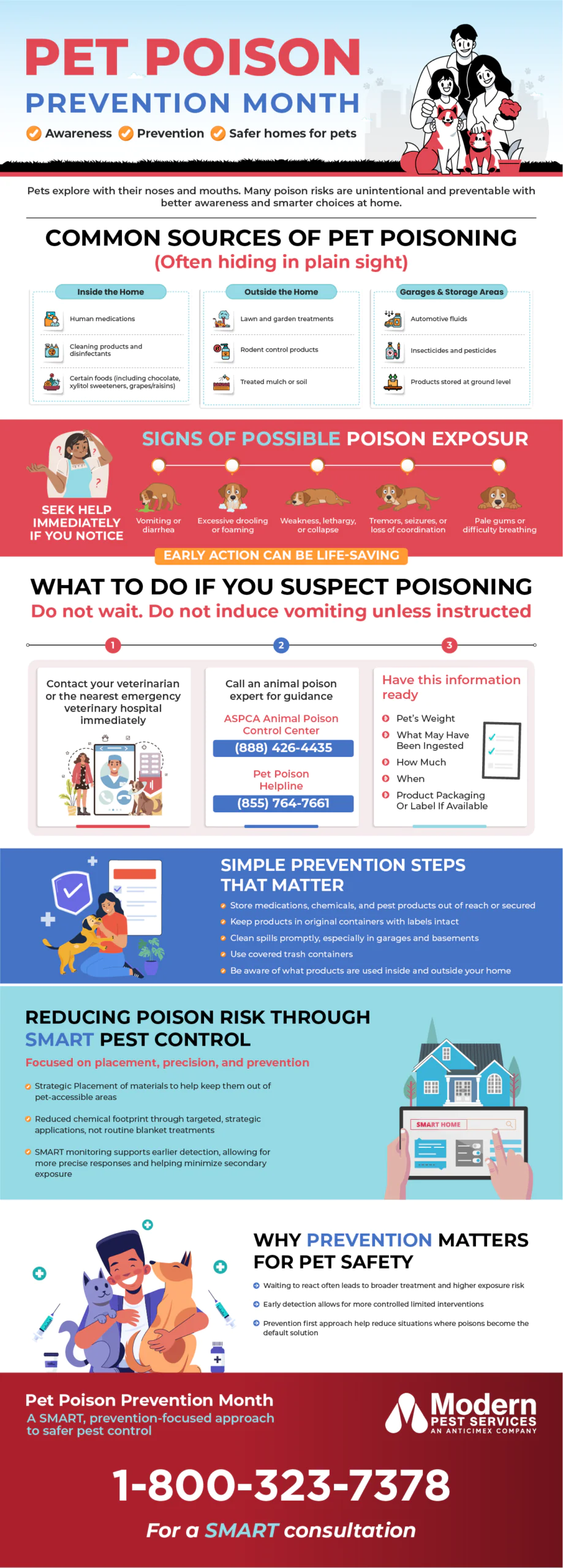
Our pets explore the world with their noses and mouths, which often leads them into trouble. Common sources of poisoning are generally grouped into three areas:
- Inside the Home: Human medications, cleaning products, and specific foods like chocolate, garlic, or onions.
- Outside the Home: Lawn and garden treatments, rodenticides, and treated mulch or soil.
- Garages & Storage: Antifreeze, insecticides, and various chemicals stored at ground level.
The 5-Minute Pet Safety Audit
Don’t wait for an accident to happen. Take five minutes today to walk through your home with these “pet-eye-view” questions to identify common sources of poisoning:
- The “Ground Level” Rule: Are your cleaning supplies, antifreeze, or insecticides stored on the floor of the garage or laundry room? Even a small leak can create a puddle that a curious pet might lick.
- The Original Container Check: Are your fertilizers, medications, or pest products in their original bottles? Original packaging contains vital first-aid instructions and ingredient lists that experts will need.
- The Kitchen Audit: Are “pet-safe” areas actually safe? Foods like chocolate, garlic, and onions are common culprits hiding in plain sight.
Recognizing the Signs
Pets explore with their noses and mouths, which often leads them into trouble. Because they can’t tell us what’s wrong, you must be able to spot the physical signs of poison exposure immediately:
- Digestive Upset: Vomiting or diarrhea.
- Neurological Issues: Tremors, seizures, or a sudden loss of coordination.
- Physical Distress: Excessive drooling, weakness, lethargy, or labored breathing.
- Visible Changes: Pale gums or sudden collapse.
What to Do in an Emergency
If you suspect your pet has ingested something toxic, do not wait and do not induce vomiting unless a professional specifically instructs you to do so. Early action is life-saving.
- Contact Professional Help: Call your veterinarian or the nearest emergency animal hospital immediately.
- Call a Poison Expert: Have these numbers saved in your phone for quick access:
- ASPCA Animal Poison Control Center: (888) 426-4435.
- Pet Poison Helpline: (855) 764-7661.
- Gather Your Info: Be ready to provide your pet’s weight, what they may have ingested, how much, and when it happened.
Be Prepared, Not Panicked
The best way to handle a pet emergency is to prevent it from ever happening. By taking a few minutes to audit your home and keeping emergency numbers within reach, you create a much safer environment for your entire family.
At Modern Pest Services, we believe in a prevention-focused approach to a safer home. We are here to help you manage your home’s environment so you can focus on what matters most—keeping your pets happy and healthy.
Call us today at 1-800-323-7378 for a consultation on how to keep your home pest-free and pet-safe.