
Tick and Mosquito Statistics: Summer Pests Impact Outdoor Habits This Summer
Spending time outdoors means fresh air, relaxation, and family fun, but pests can quickly get in the way. Our latest survey explores how Americans are preparing for summer pests, which bites and stings concern them most, and where many still fall short on prevention and safety knowledge.
47% Say Mosquitoes Prevent Them from Enjoying Their Yards
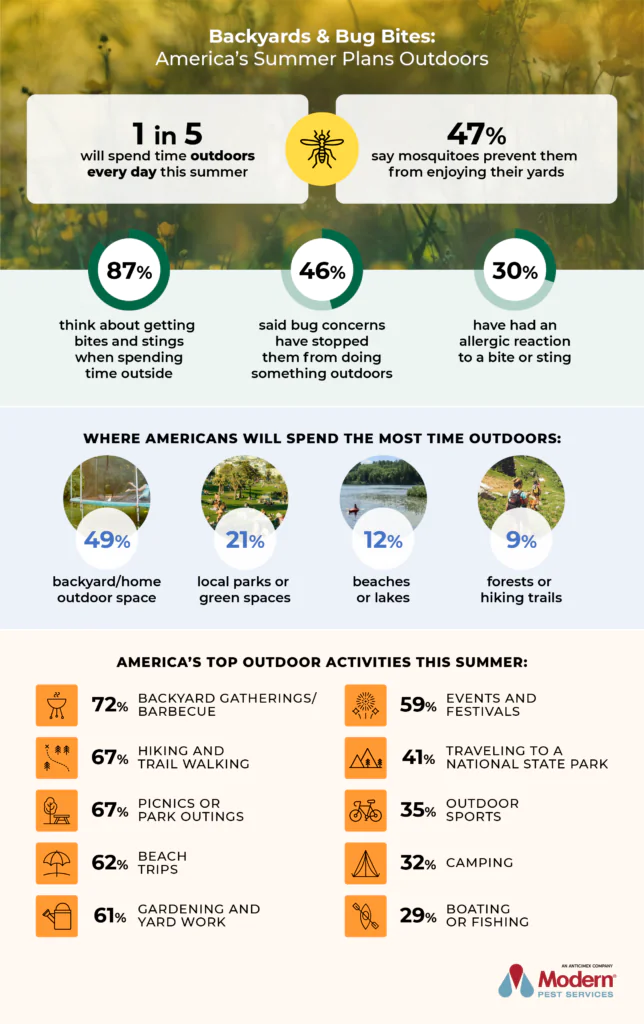
This summer, 1 in 5 Americans say they plan to spend time outside every day, and 87% think about bites and stings when heading outdoors. Nearly half (46%) say concerns about bugs have stopped them from participating in outdoor activities altogether. That concern is understandable, as 30% report having experienced an allergic reaction to a bite or sting.
When it comes to where Americans expect to spend the most time outdoors this summer, backyards and home outdoor spaces rank highest at 49%, followed by local parks and green spaces (21%), beaches or lakes (12%), and forests or hiking trails (9%).
Backyard activities are also among the most popular summer plans this year. Americans say they are planning:
- Backyard gatherings or barbecues — 72%
- Hiking and trail walking — 67%
- Picnics or park outings — 67%
- Beach trips — 62%
- Gardening and yard work — 61%
- Events and festivals — 59%
- Traveling to a national or state park — 41%
- Outdoor sports — 35%
- Camping — 32%
- Boating or fishing — 29%
For many homeowners, mosquitoes are a major obstacle to enjoying outdoor spaces. Among those with yards, 47% say mosquitoes prevent them from fully enjoying their outdoor area, and 30% have invested in professional mosquito treatments to reclaim their space.
Over 1 in 5 are “Very Worried” About Ticks–But Most are Unprepared
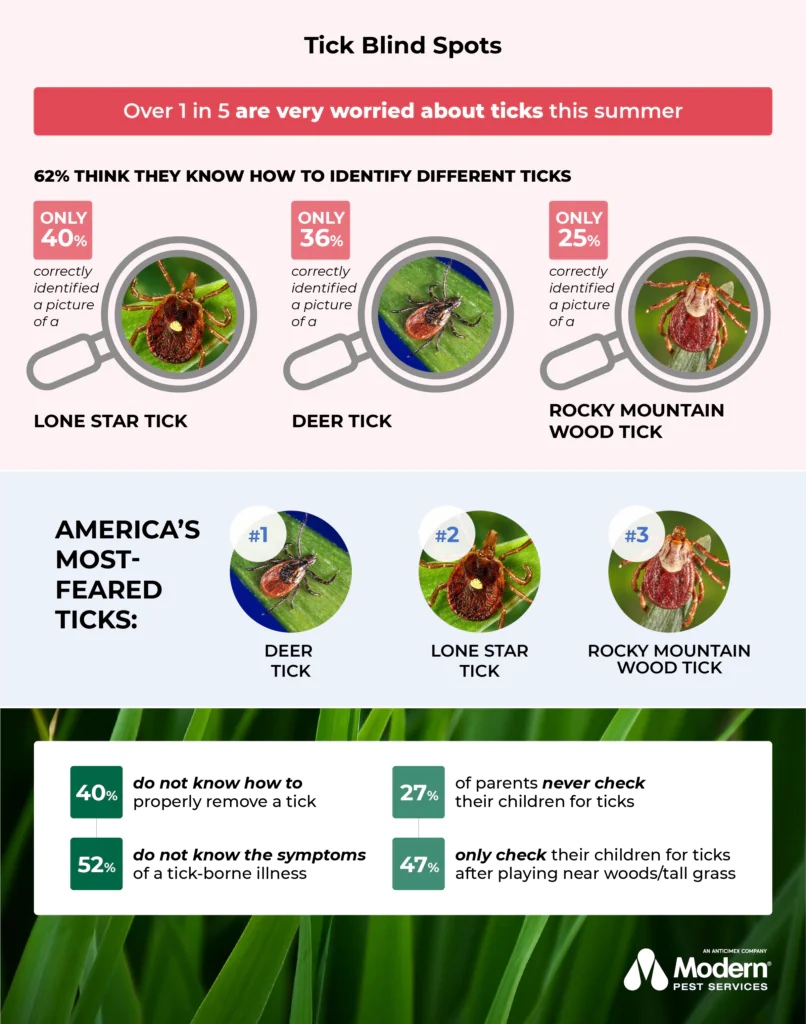
Those planning trail walks, camping trips, or hikes this summer should take time to learn about common tick species and prevention strategies. According to our survey, 21% of Americans are “very worried” about ticks this summer, while another 45% are “somewhat worried.” The ticks people fear most are deer ticks (40%), lone star ticks (12%), and Rocky Mountain wood ticks (8%).
- Deer tick: Found throughout the Northeast, Mid-Atlantic, and Upper Midwest, deer ticks are best known for spreading Lyme disease, along with illnesses like anaplasmosis and babesiosis. After a bite, watch for symptoms such as a bull’s-eye rash or flu-like illness, and contact a doctor if they appear.
- Lone star tick: Common across the eastern and central U.S., lone star ticks are continuing to expand northward. Their bites have been linked to ehrlichiosis, tularemia, and alpha-gal syndrome, a potentially serious red meat allergy. If bitten, remove the tick promptly and consult a healthcare provider, as antibiotics may be recommended.
- Rocky Mountain wood tick: Typically found in the Mountain West and Pacific Northwest, these ticks are often found in shrublands and along hiking trails. They can carry Rocky Mountain spotted fever, Colorado tick fever, and may even cause tick paralysis. Remove the tick immediately and seek medical attention if symptoms such as fever, rash, or headache develop.
While 62% of Americans think they know how to identify different ticks, we tested their knowledge. Only 40% correctly identified a lone star tick, 36% identified deer tick, and 25% correctly identified the rocky mountain wood tick.
Knowledge around tick safety and prevention was also limited. Two in five Americans said they do not know how to properly remove a tick, while 52% are unfamiliar with the symptoms of tick-borne illnesses. Among parents, more than a quarter (27%) said they never check their children for ticks, and 47% only perform checks after time spent near woods or tall grass.
Handling Ticks, Mosquito Bites, and Insect Stings
At Modern Pest, we typically see tick, mosquito, and stinging insect concerns in the warmer months. Take a look at how Americans are managing each.
Mosquito Bites and Prevention
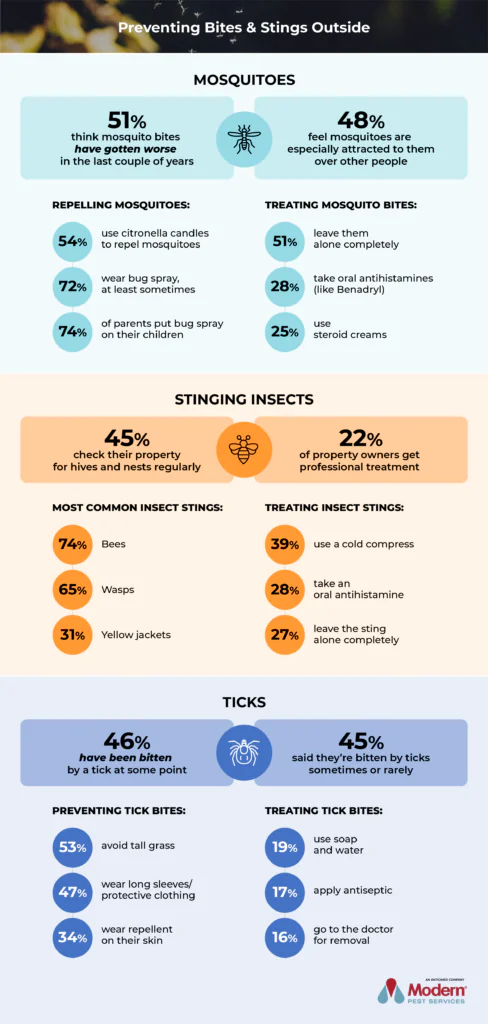
Many Americans feel mosquito activity has become more intense in recent years. More than half (51%) believe mosquito bites have gotten worse over the last couple of years, while 48% feel mosquitoes are especially attracted to them compared to other people.
Parents are taking extra precautions, with nearly 3 in 4 (74%) saying they apply bug spray to their children. The most common mosquito prevention methods include:
- Spray repellent – 89%
- Citronella candles – 54%
- Natural oils – 40%
- Clip-on repellents – 23%
When it comes to treating mosquito bites, most Americans take a simple approach. Over half (51%) leave bites alone entirely, while others use oral antihistamines such as Benadryl (28%) or steroid creams (25%) to reduce itching and irritation.
“The goal is to manage what attracts mosquitoes, rather than just reacting to the bugs themselves. Removing any standing water or items that collect water in your outdoor space will greatly reduce their breeding habitats. If you still find yourself swatting at your arm instead of enjoying your evening outdoors, try setting up a few well-placed fans; mosquitoes are weak flyers, and the breeze makes it difficult for them to navigate. ”
Dan S. – SMART/Field Specialist
Bee, Wasp, and Hornet Stings and Prevention
Stings from flying insects are a common summer experience for many Americans. Nearly 4 in 5 people say they have been stung at some point, with bees (74%), wasps (65%), and yellow jackets (31%) being the most common culprits. More than half (53%) say they get stung during some summers, while 4% report being stung every year.
Despite how common stings are, fewer than half of homeowners (45%) regularly inspect their property for hives or nests. Another 22% choose professional pest treatment to prevent stings.
While more than a quarter (27%) say they leave stings alone completely, common treatments include:
- Cold compresses – 39%
- Oral antihistamines – 28%
- Baking soda and water mixtures – 11%
Much like dealing with mosquitoes, prevention is your best approach. You want to remove common attractants, which means keeping tight lids on your outdoor garbage, washing away sweet spills on the deck, and picking up fallen fruit from your yard. By eliminating these food sources and inspecting your home early in the season, you can safely deal with small starter nests before they become established and aggressive later in the summer.”
Dan S. – SMART/Field Specialist
Tick Bites and Prevention
How common are tick bites? 46% said they have been bitten by one at some point, and 38% (almost all of them) say it happens rarely.
Because of the dangers of tick bites, it’s always best to be safe. Here are the most popular methods for prevention:
- Avoiding tall grass – 53%
- Wearing long sleeves or protective clothing – 47%
- Wearing repellent on skin – 34%
- Wearing repellant on clothing (permethrin) – 18%
- Drying outdoor clothing on high heat – 11%
Some Americans clean bites with soap and water (19%) or apply antiseptic (17%), while 16% visit a doctor for tick removal. Others rely on home remedies, including tea tree oil (11%).
“The most effective defense against ticks is a layered approach—keeping grass trimmed, clearing brush where ticks thrive, and performing regular tick checks on people and pets. Professional treatment is the final and most critical layer. By treating the perimeter and breeding areas of your yard, we can greatly reduce tick populations and help keep your outdoor space safe for your family, pets, and friends.”
Dan S. – SMART/Field Specialist
Don’t Let Pests Take Over Your Summer
Mosquitoes, ticks, and stinging insects are an unavoidable part of warm-weather life — but they don’t have to ruin a beautiful New England summer. Whether you’re dealing with a mosquito problem that’s made your backyard unusable, discovering a wasp nest near your home, or simply want peace of mind before tick season hits its peak, our team has the expertise to help. We offer targeted treatments designed to protect your outdoor spaces all season long, so you can focus on the barbecues, hikes, and family moments that make summer worth it. Learn more about our seasonal mosquito, tick, and flea program or contact us for a free estimate.
Methodology
In May 2026, we surveyed 1,004 Americans about their experience with summer pests. Ages ranged from 18 to 75 with an average age of 39. Among respondents, 49% were male, 49% were female, and 2% were nonbinary or preferred not to say.
For media inquiries, please reach out to media@digitalthirdcoast.net.
Fair Use
When using this data and research, please attribute by linking to this study and citing Modern Pest Services.