
How to Get Rid of Lone Star Ticks in Yard
Once largely confined to the Southeast, lone star ticks have steadily made their way north and, in recent years, are now well established in parts of the Northeast, including New England.
As such, they’re one more tick species you may have to contend with in your own yard from summer through fall.
But lone star ticks are unlike most ticks we’re familiar with, which simply wait for a host to brush past before hitching a ride (a behavior known as questing). This tick species also actively pursues nearby hosts, making them more like tiny predators on the hunt than passive backyard pests.
“All life stages are aggressive biters of humans and companion animals,” as Michael J. Skvarla, Assistant Research Professor of Arthropod Identification at Penn State, puts it,
To make matters worse, their bites have been associated with alpha-gal syndrome, an allergy that can trigger reactions after eating red meat and dairy products.
As tick experts and researchers note, those reactions can include potentially life-threatening anaphylaxis, making lone star ticks a threat homeowners shouldn’t brush off as just another backyard nuisance.
Keep Your Lawn and Vegetation Trimmed
Ticks are highly susceptible to desiccation (drying out). Dr. Griffin Dill, Manager of the University of Maine Cooperative Extension Tick Lab, recommends homeowners “…increase sunlight by pruning the lower branches of trees and thinning shrubs and hedges.”
A 2025 University of Florida study on the invasive plant species cogongrass sheds light on why this advice can make such a difference. Researchers found that lone star ticks survived more than 50% longer where dense stands of the plant created a cooler, more humid microclimate that protected them from drying out.
That’s why we always remind New England homeowners not to overlook something as ordinary as an overgrown lawn. Keep your grass at about 3 inches by mowing it regularly. But avoid cutting it any shorter, as doing so can damage the root system.
Pay extra attention to vegetation along fences, sheds, and property lines, especially those bordering woodlands and brushy areas.
Clear Your Yard of Leaf Litter
Autumn comes with beautiful foliage, but it also leaves behind a carpet of fallen leaves that can serve as hiding places for lone star ticks. Tiny larvae, better known as seed ticks, often cluster together beneath this leaf litter.
With that in mind, rake up fallen leaves and other organic waste such as dead grass, pine needles, and twigs that can provide similar cover for these pests.
Dispose of them properly as well. One strong gust of wind can easily scatter them along foundations, beneath decks, and into the corners of your yard.
Create a Mulch Barrier
There’s a long-standing misconception that trees are to blame for tick bites. “Ticks don’t fall from trees; they crawl up from the ground and dense vegetation,” explains Dr. Holly Gaff, Chair of Biological Sciences at Old Dominion University.
Creating a three-foot-wide mulch barrier can therefore be a good line of defense, slowing down lone star ticks as they move between your yard and adjacent wooded or shrubby areas. Dry, coarse materials such as wood chips or gravel work best since they create a warm, dry surface that’s hostile to lone star tick survival.
We also recommend extending these barriers around swing sets, patios, play areas, and other outdoor spaces that sit close to wooded edges. As always, keep these areas free of fallen leaves, weeds, and other plant debris.
Install Deer Fencing
Seeing deer wander through your backyard can certainly add to that peaceful, close-to-nature feeling. But you never know how many tiny hitchhikers may have come along for the ride.
The northern white-tailed deer, native to New England, is one of the primary hosts for lone star ticks, with larvae, nymphs, and adults all feeding on them. It is a common sight in many suburban backyards and gardens.
Alternatively, planting deer-resistant plants around the perimeter of your yard, such as boxwood, inkberry holly, lavender, or catmint, can help discourage deer from entering while keeping your landscape attractive.
Manage Rodent Infestations
Among the many mammals that serve as hosts for lone star ticks, rodents deserve particular attention. These pests remain active throughout the fall, searching for food and shelter around your property.
If they’re carrying attached lone star tick larvae or nymphs, those ticks may finish feeding, become engorged, and drop off in your yard. Worse still, rodents can squeeze through the tiniest of openings, particularly around garages and utility penetrations, potentially bringing attached ticks indoors with them.
That’s particularly concerning, with recent research showing that lone star ticks can survive for at least one to three weeks on indoor flooring. For a hungry tick, that’s more than enough time to latch onto a new host, whether that’s you, your family, or your pet.
To rodent-proof your home, focus on sealing gaps, removing food sources, and reducing outdoor hiding places. If the problem persists, a professional rodent control service can locate hidden infestations and eliminate them at the source.
Apply an EPA-Registered Pesticide
If lone star ticks persist despite your landscaping and physical exclusion efforts, you can use ready-to-use sprays or concentrates containing EPA-registered active ingredients. These include permethrin, bifenthrin, or cyfluthrin.
You can typically apply them using a pump sprayer or hose-end sprayer, but make sure to follow the manufacturer’s label directions.
We recommend treating your yard twice a year, ideally in the spring and fall. These coincide with periods of heightened blacklegged tick activity, the primary vector of Lyme disease in New England.
Even so, this doesn’t mean you should spray your entire yard. Blanket applications are unnecessary and simply waste product (and money) on areas where ticks are unlikely to be found. Instead, focus your treatment on tick habitat, such as wooded edges, brushy areas, dense vegetation, ornamental plantings, and other shaded, moisture-rich areas.
Identifying Lone Star Ticks
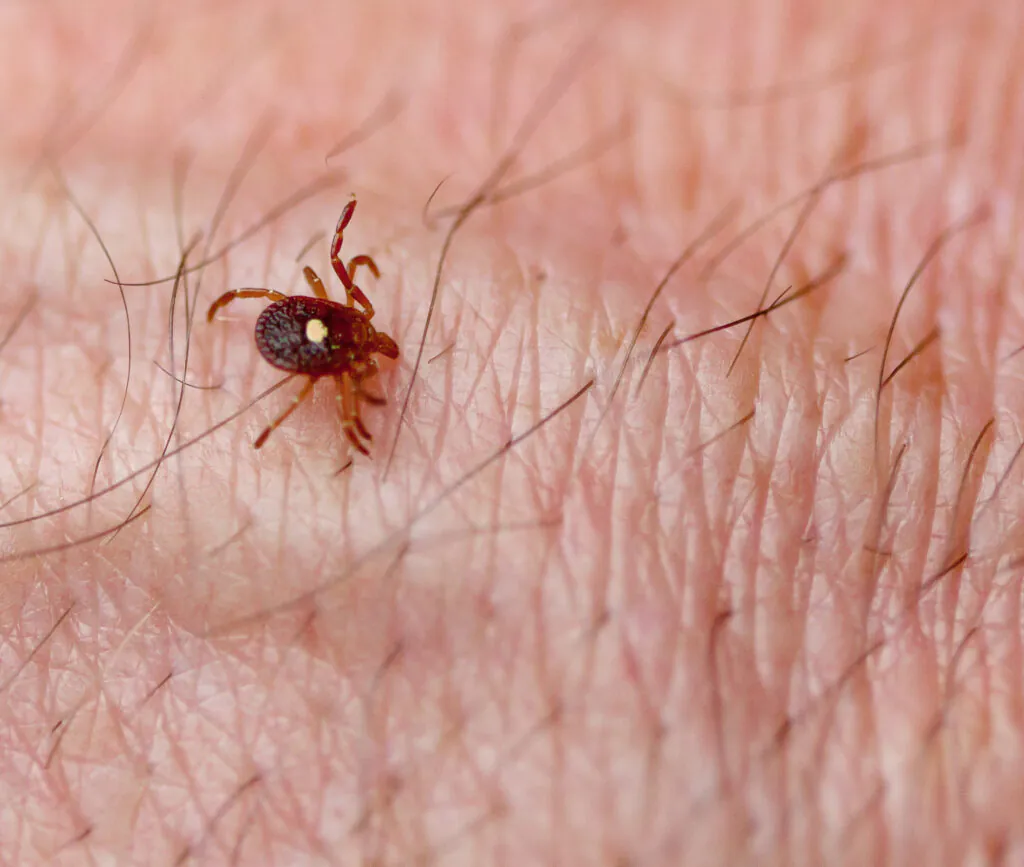
Adult lone star ticks are relatively easy to distinguish from other common tick species. Apart from their dark reddish color, they also have festoons, or small grooves around the rear edge of the body, which can help distinguish them from blacklegged ticks.
Adult females are the easiest to identify due to the single conspicuous silvery-white spot in the center of their back – the “lone star” that gives the species its common name. According to Skvarla, “No other ticks in the Northeast have this color pattern.”
Males can be a little trickier to identify. They typically have multiple pale, whitish streaks around the outer edge of their backs, though some may lack these markings and appear almost entirely dark reddish-brown. They’re also generally smaller than females.
Protecting Yourself Against Lone Star Ticks
Alpha-gal syndrome isn’t the only health concern associated with lone star ticks. They have also been known to transmit pathogens that cause tularemia, ehrlichiosis, Bourbon virus disease, Heartland virus disease, and Southern tick-associated rash illness (STARI). Below are measures to protect yourself from lone star tick bites.
Apply Tick Repellent Before Heading Outdoors
If you’re planning to go hiking, camping, or gardening, use an EPA-registered tick repellent containing DEET, picaridin, IR3535, oil of lemon eucalyptus (OLE), para-menthane-diol (PMD), or 2-undecanone. Be sure to apply it to exposed skin not covered by clothing, following the manufacturer’s label directions.
Wear Protective Clothing
Wear a long-sleeved shirt, long pants, socks, and closed-toe shoes. Make sure to close off any gaps by tucking your shirt into your pants and your pant legs into your socks.
If you’re an avid gardener or simply love spending time outdoors, we also recommend treating your outdoor apparel and footwear with permethrin. Permethrin kills ticks on contact and remains effective through multiple washes.
Check for Ticks When You Get Home
Upon getting home, give yourself and your clothing a thorough tick check. Lone star tick larvae can be especially easy to miss due to their tiny size, though wearing light-colored clothing may help them stand out better against the fabric.
Toss your clothes into the dryer before washing them. As surprising as it sounds, ticks can survive in water and even through multiple wash cycles. Exposing your clothes to high heat for at least 10 minutes beforehand is much more effective at killing these pests.
Then, take a shower as soon as possible after coming indoors. While showering, carefully check common hiding spots such as behind your knees, under your arms, inside your ears, and on your scalp.
Protect Your Pets
Your dog or cat can become both a meal and a ride for lone star ticks. Talk to your veterinarian about keeping your pet on a year-round tick preventive. This approach can limit infestations on your furry friend and reduce the number of ticks around your home.
If you suspect an infestation, it’s best to keep your pet on a leash. Limit their roaming to well-maintained areas and keep them out of tall grass and other dense vegetation where lone star ticks may be lurking.
Call a Professional for Lone Star Tick Control
Given lone star ticks’ aggressive host-hunting behavior, along with the serious health risks they pose, they’re not a pest to take lightly. At Modern Pest, we’ll help you take back your yard using our Integrated Pest Management (IPM) approach.
Our tick pest control services combine exclusion, habitat modification, targeted treatments, and ongoing monitoring so you can enjoy your outdoor spaces with greater peace of mind. Call Modern Pest today at (800) 323-7378 or contact us for a FREE quote.