

Pest Control Survey: Stopping Rodents & Insects from Intruding
As temperatures begin to cool, many pests start looking for the same thing we do: warmth, food, and shelter. Cracks in foundations, gaps around doors, and attics or crawl spaces become inviting places for rodents and insects preparing to ride out the winter. That seasonal shift means fall is one of the most important times of year for homeowners to think about pest prevention.
To better understand how people prepare for fall pests, we surveyed more than 1,000 U.S. homeowners about the pests they’re most concerned about, the steps they take to protect their homes, and how much infestations have cost them.
How Homeowners are Prepping for Fall Pests
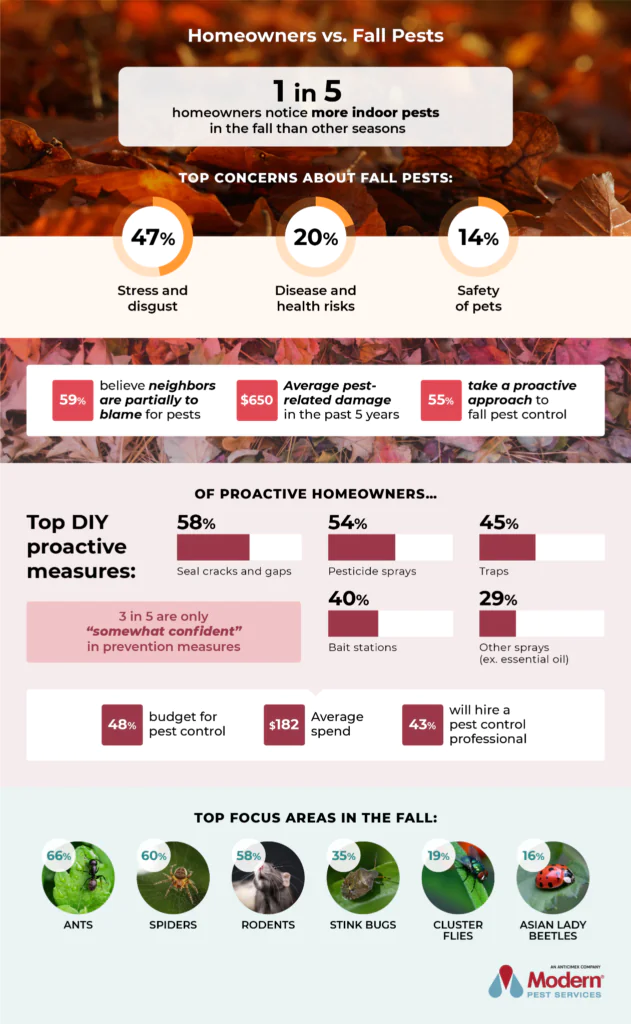
Summer may be peak pest season, but fall brings its own challenges. Our survey found that 1 in 5 homeowners notice the most indoor pest activity during the fall, making it the second most common season for household pest problems.
Nearly half of homeowners (47%) say the stress and disgust of having pests in their home is their biggest worry, while 20% are most concerned about disease and other health risks. Another 14% say protecting their pets from pests or pest control products is their top concern.
Infestations can also take a financial toll. Homeowners who experienced pest-related damage reported spending an average of $650 on repairs or remediation over the past five years.
Although 59% believe neighboring properties are at least partly responsible for pest problems, most homeowners still recognize that protecting their own home starts with prevention. As the weather cools, many are taking proactive steps to keep unwanted visitors from moving in.
Over Half Take a Proactive Approach to Fall Pest Control
Our survey found that 55% take a proactive approach to fall pest control, tackling common entry points and treating their homes with sprays.
The most popular preventive measure is sealing cracks and gaps around the home (58%), helping block rodents and insects from slipping inside. Many homeowners also rely on pesticide sprays (54%), while others use traps (45%), bait stations (40%), or natural alternatives like essential oils and vinegar (29%).
The top pests homeowners are most focused on preventing are ants (66%), spiders (60%), and rodents (58%). Others include stink bugs (35%), cluster flies (19%), and Asian lady beetles (16%).
Preventive pest control is also becoming a regular household expense. Nearly half of homeowners (48%) budget for fall pest control, spending an average of $182 each season on everything from DIY products to professional services.
Despite these efforts, confidence is shaky: 3 in 5 homeowners say they are only somewhat confident their prevention measures will work, and another 4% aren’t confident at all. Even so, only 43% hire a professional pest control company.
“DIY sprays and natural remedies may help reduce the occasional pest sighting, but they’re rarely enough to stop determined rodents or large numbers of overwintering insects searching for a warm place to spend the winter. As temperatures begin to cool across New England, pests such as mice, cluster flies, stink bugs, and lady beetles can exploit even the smallest gaps and openings to gain access to homes. Professional pest control goes beyond treating visible activity by identifying entry points, addressing conditions that attract pests, and implementing long-term prevention strategies. This proactive approach helps homeowners avoid the frustration, expense, and uncertainty of repeated trial-and-error treatments.”
Dan Smith – Field Specialist, Modern Pest Services
Interesting Facts and Misconceptions About Fall Pests
Even among homeowners who take preventive measures, our survey uncovered several surprising findings about pest behavior, common misconceptions, and how people respond to infestations.
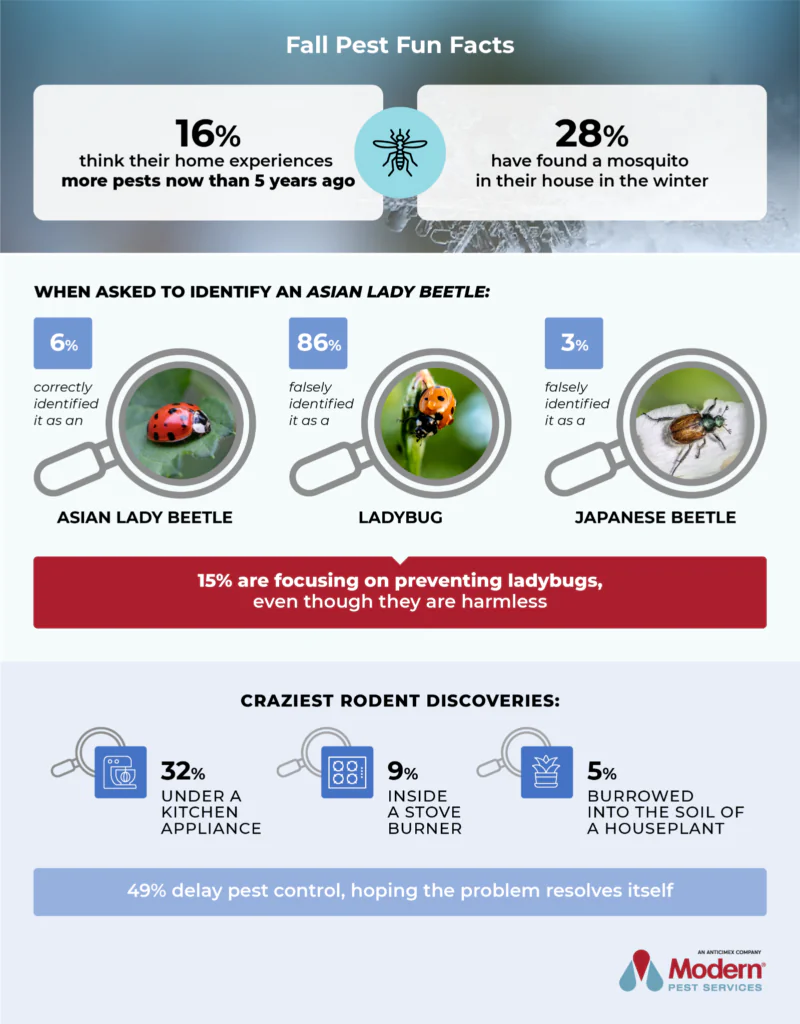
- Many homeowners feel pest problems are becoming more common. 16% of homeowners say they experience more pests today than they did five years ago.
- Summer pests don’t always disappear in the winter. More than 1 in 4 homeowners (28%) have found a mosquito inside their home during the winter. While mosquitoes are typically associated with warm weather, they can survive indoors if they find heated spaces like garages, basements, or crawl spaces.
“Your crawl space or basement may be out of sight, but for certain pests, it can provide the perfect place to ride out the winter. As temperatures drop across New England, insects such as paper wasp queens, yellowjacket queens, spiders, and occasional invaders may seek sheltered spaces where they’re protected from harsh weather. Many of these pests enter a dormant or hibernation-like state known as diapause, allowing them to survive the colder months with minimal activity. Because basements, crawl spaces, and utility areas often provide stable temperatures and protection from the elements, they can serve as ideal overwintering sites. During periods of unseasonably warm weather, some pests may become temporarily active and find their way into living spaces, creating the impression that an infestation has suddenly appeared.”
Dan Smith – Field Specialist, Modern Pest Services
- Most homeowners can’t identify an Asian lady beetle. When shown a photo of this common fall invader, only 6% correctly identified it as an Asian lady beetle. The vast majority (86%) mistook it for a ladybug, while 3% thought it was a Japanese beetle. It’s no surprise, then, that 15% of homeowners say they’re trying to prevent “ladybugs” this fall—even though true ladybugs are beneficial insects that don’t damage homes.
- Rodents turn up in unexpected places. Once inside, mice don’t just stay in attics or basements. Homeowners reported finding rodents under kitchen appliances (32%), inside stove burners (9%), and even burrowed into the soil of a houseplant (5%).
- Out of sight, out of mind: many homeowners procrastinate pest control. Nearly half (49%) admit they’ve delayed dealing with a pest problem, hoping it would resolve itself. Unfortunately, infestations rarely disappear on their own, and waiting often gives pests more time to reproduce, spread, and cause costly damage.
Rodent Prevention Challenges and Techniques
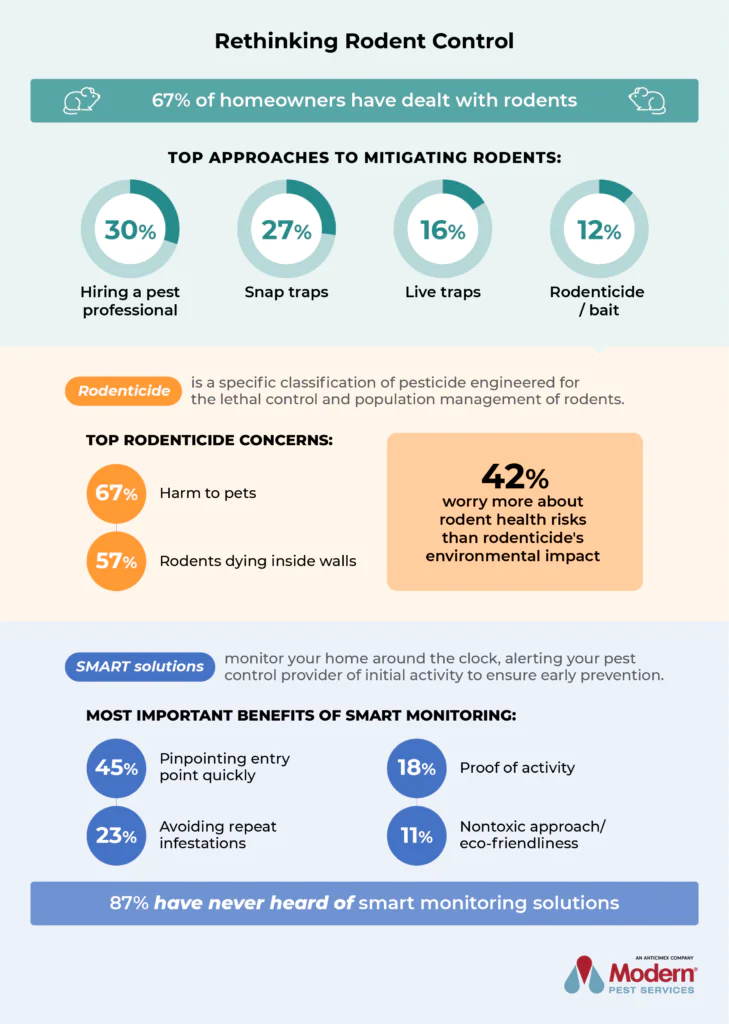
Our survey found that 67% of homeowners have dealt with rodents. When they appear, homeowners are split on how to respond:
- 30% hire a pest control professional
- 27% use snap traps
- 16% use live traps
- 12% rely on rodenticides or bait
Rodenticide is a specific classification of pesticide engineered for the lethal control and population management of rodents. Many homeowners are hesitant to use them.
Among those surveyed, 67% worry about the potential harm to pets, while 57% are concerned about rodents dying inside walls or other inaccessible areas. However, 42% say they’re more concerned about the health risks rodents pose to their household than the environmental impact of rodenticides.
Newer technologies offer options, but awareness is low. Smart rodent monitoring systems use sensors to detect rodent activity around the clock and notifies pest control providers when rodents are present, allowing problems to be addressed earlier and more precisely.
However, 87% of homeowners have never heard of smart monitoring solutions. After learning about them, respondents said the biggest potential benefits would be:
- Pinpointing rodent entry points more quickly (45%)
- Preventing repeat infestations (23%)
- Providing proof of rodent activity (18%)
- Offering a nontoxic, eco-friendly approach (11%)
“Traditional rodent control is reactive. You set a trap and wait. SMART monitoring acts more like a 24-hour security system for your home’s hidden spaces. Using connected sensors and real-time data, we can detect rodent activity early, identify where and when rodents are moving through the structure, and respond before a minor issue becomes a full-blown infestation. As the seasons change, construction settles, landscaping matures, or rodent pressure shifts, the SMART system continuously provides new insights that allow us to adapt our strategy accordingly. Rather than relying on periodic inspections alone, we’re able to make data-driven adjustments that help keep homes protected year-round. It transforms rodent control from simply catching mice to creating a smarter, more proactive approach to pest-proofing the home.”
Dan Smith – Field Specialist, Modern Pest Services
Take the Guesswork Out of Fall Pest Prevention
Sealing cracks, setting traps, and relying on DIY sprays are reasonable first steps, but they don’t always address what’s happening behind the walls. That’s where a professional partner like Modern Pest Services can make the difference between hoping a problem stays away and knowing it’s handled.
Modern Pest offers residential pest control programs built around New England’s shifting seasons, along with targeted rodent control services — including SMART, an electronic 24/7 rodent monitoring system that catches activity early and offers homeowners real peace of mind as the weather turns.
Methodology
In July 2027, we surveyed 1,004 homeowners across America about preparing for fall pests. Ages ranged from 18 to 75 with an average age of 46. Among respondents, 50% were male, 49% were female, and 1% were nonbinary or preferred not to say.
For media inquiries, please reach out to media@digitalthirdcoast.net.
Fair use
When using this data and research, please attribute by linking to this study and citing Modern Pest Services.