
How to Get Rid of Carpenter Ants in Your Home
There is a bit of irony behind the name “carpenter ant.” While carpenters are known for building and repairing homes, these ants do the opposite. They tunnel through weakened timber to create their nests, slowly damaging areas of your home that stay hidden from plain sight for months or even years.
By the time you notice the signs, the damage has become more expensive to fix, even more so considering that homeowners insurance often doesn’t cover this type of damage.
This guide covers how to get rid of carpenter ants in your home, including how to treat the infestation and the preventive measures needed to keep them from returning.
How to Tell If You’re Dealing With Carpenter Ants
To the untrained eye, different types of ants may look like the same pest. Reality is that the signs they leave behind, where they build their nests, and what attracts them can vary.
And so, the methods needed to manage them can differ as well. Identifying the species beforehand saves you from wasting time and effort on treatments that prove ineffective against the infestation.
What carpenter ants look like
Carpenter ants are among the larger ants found around homes. These polymorphic insects can measure between 1/8 to 1/2 inch in length, with the queens being slightly larger. Common characteristics include:
- Color: Usually black, though some species may appear reddish, brown, or a combination of black and red.
- Body shape: A smooth, rounded thorax with a narrow waist between the thorax and abdomen. Unlike many ants, carpenter ants have a single node between these body sections.
- Antennae: Elbowed antennae, which help distinguish them from termite swarmers.
- Wings: Winged carpenter ants, also called swarmers, have two pairs of wings, with the front pair longer than the hind pair.
Carpenter ants are often confused with termites as both can produce winged reproductive insects. A closer look can tell the difference. Termite swarmers have straight antennae, wings of equal length, and a broad, uniform body shape. Carpenter ants have bent antennae, uneven wing lengths, and a more defined waist between their body segments.
Where carpenter ants build their nests
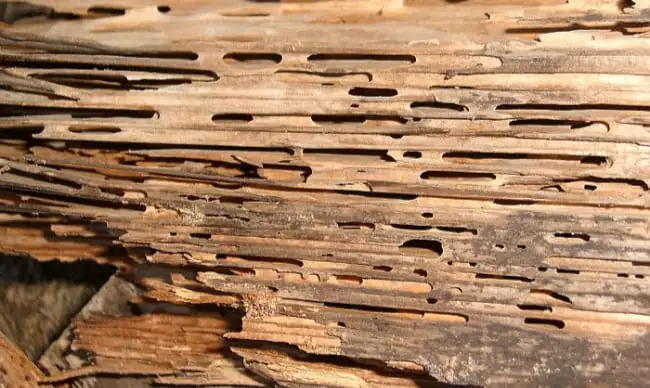
Carpenter ants prefer to build their nests in moist, damaged, or softened wood since it’s easier to excavate. They don’t eat the wood they carve out like termites do. Instead, they push out debris and create tunnels called galleries, which serve as nesting areas for the colony.
For suspected carpenter ant infestation, homeowners can check these favorable nesting locations:
- Wall voids
- Attics
- Basements and crawl spaces
- Around window and door frames
- Bathroom walls (especially near plumbing leaks)
- Areas around sinks, roofs, or other moisture sources
- Tree stumps, fallen branches, and decaying logs near the home
What attracts carpenter ants?
As mentioned, carpenter ants are strongly attracted to damp, moldy wood since it provides the ideal conditions to excavate nesting galleries.
Pay close attention to areas such as leaky pipes, plumbing condensation, water damage, tree branches touching the home, firewood stored against the structure, and wooden construction materials left exposed to moisture.
When it comes to food, carpenter ants are no different from many other ants in that they’re attracted to sugary foods. However, they also feed on protein sources such as insects and other small arthropods, and even dry pet food crumbs.
Signs of a Carpenter Ant Infestation
Knowing what carpenter ants look like is the first step, but spotting the signs they leave behind is what confirms there may be an infestation in your home. Take note of these common signs.
Worker ant trails at night
Carpenter ants are primarily nocturnal pests, with workers doing most of their foraging for food, water, and suitable nesting conditions from sunset through the early morning hours.
Unlike the common stereotype of household ants forming long, organized trails, carpenter ants may travel individually or in loose groups while searching for resources. This behavior can make it harder to trace their movement back to the colony.
Sawdust-like material (frass)
Small piles of debris near wooden structures, particularly around window frames, wooden beams, baseboards, and other areas with wood damage, can be a warning sign of carpenter ant activity.
Although it looks like sawdust, this material is actually called frass. It consists mainly of wood shavings and fragments that carpenter ants remove while excavating their nesting galleries, along with other debris such as insulation particles or insect remains.
The presence of frass is a stronger indicator of an infestation than simply spotting a few worker ants alone.
Rustling sounds inside walls
Faint rustling, crackling, or clicking sounds coming from inside walls can be a sign of carpenter ant activity. These noises may occur as workers move through their nesting galleries and excavate wood to expand the colony.
Of course, sounds inside walls can have many causes. But when you pair those noises with signs like frass or the occasional carpenter ant sighting, it becomes much harder to ignore the possibility of an infestation.
Winged carpenter ants indoors
The presence of winged carpenter ants inside your home can be a sign that a mature colony is nearby and, as such, a good reason to investigate further. These winged ants, also known as swarmers, are the reproductive members of the colony that leave the nest to mate and establish new colonies.
How to Get Rid of Carpenter Ants
The most effective way to permanently get rid of carpenter ants is to locate and eliminate the nest. Spraying the ants you see around your home may provide temporary relief, but it’s unlikely to solve the root problem as those workers are only a small fraction of the colony.
Follow the ant trail
Check for carpenter ant activity during the evening hours when workers are often most active. Use a flashlight to inspect common travel routes such as basements, crawl spaces, and window frames, then look closer at where the ants disappear. Small cracks and openings in these areas could be entry points that help you narrow down the nest location.
Use baits to locate and eliminate the colony
Ant baits work by turning worker ants into carriers that transport the bait back to the colony, where it’s shared with other ants, including the queen. Over time, this helps eliminate the colony at its source rather than only the ants you see.
Watch where ants are traveling and place the bait near areas of activity so workers can find and transport it back to the colony. Always follow the manufacturer’s instructions when placing ant baits, including recommended placement, quantity, and safety precautions for pets and children.
As tempting as it may be, avoid spraying insecticide over bait trails. This can kill worker ants before they have a chance to transport the bait back to the colony, reducing the overall effectiveness of the treatment.
Treat the nest
Once the nest location has been identified, treatment options may include:
- Insecticidal dust: These are dry pesticide formulations, such as silica gel dusts and diatomaceous earth (DE), that are applied into cracks, crevices, and wall voids, typically using a duster. The dust clings to ants as they move through treated areas, helping transfer the product throughout the nesting site.
- Foam treatments: These products contain a non-repellent insecticide that expands into a thick, shaving-cream-like foam to fill wall voids after application. The extension tube allows the treatment to reach deeper into voids and closer to hidden nesting areas.
When applying any pesticide, always follow the product label carefully and use the recommended protective equipment if required.
Important note: applying these treatments without knowing where the nest is located can be futile, leaving you to waste time, effort, and money without addressing the source of the infestation.
So, if you’re unsure where the exact location of the nest is, call a professional ant exterminator. At Modern Pest Services, our technicians can help carefully open damaged wood sections when needed and pinpoint the colony source without causing unnecessary damage to your home.
Apply best practices for carpenter ant prevention
Treating the nest addresses the immediate infestation, but carpenter ants can return if the conditions that attracted them remain. Make your home less inviting for these pests with these preventive measures:
- Repair leaking pipes, damaged gutters, roof leaks, and other sources of excess moisture.
- Seal openings that can serve as entry points for carpenter ants. Silicone caulk works well for small gaps around window frames, doors, and siding seams. Meanwhile, an expanding foam or a mesh screen may be better suited for larger openings around pipes, vents, and utility lines.
- Repair damaged screens or install mesh barriers over vents and other openings where airflow needs to be maintained.
- Keep firewood elevated off the ground and, whenever possible, stored away from your house.
- Cut back tree branches, shrubs, and other vegetation touching the roof or siding, as they can provide carpenter ants with a bridge from outdoor nesting areas into your home.
Continue monitoring for ant activity
Getting rid of one nest doesn’t mean the entire problem is finished. Carpenter ants are among the ant species known to establish satellite nests in areas with conditions that differ from the main nest. Continue checking common problem areas and keep an eye out for any signs that activity has returned.
How to Get Rid of Carpenter Ants in Specific Areas
Inside walls
If you see carpenter ants entering cracks, gaps, or openings around walls, avoid sealing the area immediately before treatment. Closing off these entry points can force ants to create new pathways and make the colony harder to trace.
Instead, follow the ant trail to identify where they’re entering and look for signs such as frass and moisture damage. Insecticidal dust or foam treatments can then be applied directly into the void through an existing opening or a small drilled access point created to deliver the treatment.
However, nests hidden behind finished drywall, inside ceiling voids, or within structural wood can be much harder to reach. In these situations, a professional can help locate the colony, determine the least invasive access method, and apply treatment without unnecessary damage to your home.
In trees
If carpenter ants are nesting in a tree near your home, start by determining whether the tree is actually supporting a colony or simply acting as a pathway into your house.
Carpenter ants usually don’t infest healthy, solid trees. They prefer moist, decaying, or damaged wood, such as dead branches, tree cavities, old stumps, or broken limbs left behind after a storm or hurricane.
If the tree is close to your home, trim back branches that touch the roof, siding, or other parts of the structure. Remove decaying wood, dead limbs, or fallen logs, and place them a reasonable distance away from the house to reduce potential nesting sites near your property.
In the yard
Whether it’s the backyard or front yard, outdoor spaces are perfect settings for fun activities like weekend bonfires, construction projects, and landscaping work. But these same activities can leave behind decaying lumber, firewood, and other wooden materials that create conditions ripe for carpenter ants.
Proper upkeep is key. Clear away leftover wood materials and store firewood and any usable lumber in a dry area, ideally elevated off the ground and away from your home.
In the kitchen
Seeing a carpenter ant in the kitchen doesn’t always mean the nest is inside the cabinets. They may simply be foraging for food or water. Nevertheless, store food in sealed containers and clean up spills, crumbs, and food residue quickly to avoid attracting more activity.
And as always, keep the area dry by wiping up water around sinks and countertops, checking under cabinets for moisture buildup, and fixing leaks from plumbing or other appliances.
Around window sills
Carpenter ants around window sills use gaps around the frame as entry points into your home. Older homes with wooden window frames may be more vulnerable, especially when the wood has become softened by moisture from rain or condensation.
If activity is accompanied by frass beneath the window sill, it can be a strong indication that a nest or nesting gallery is nearby. Follow the ant trail to locate where the’re entering, then use baiting or targeted treatments mentioned earlier to treat the source of the infestation.
In the bathroom
The bathroom is one of the more common areas where carpenter ants may nest due to the higher moisture levels found in these spaces. Daily showers or leaks that go unnoticed for years can leave cabinetry, woodwork, and other materials damp, creating suitable conditions for nesting.
And because these nests can sometimes be hidden behind bathroom walls, locating and treating them can be a complicated undertaking. We find ourselves called in for these situations quite often.
For long-term prevention, keep your bathroom well ventilated, dry up standing water after use, and address any plumbing leaks or moisture issues as soon as they appear.
Under a deck
The space underneath a deck is a common nesting location for carpenter ants since it’s shaded, protected from disturbance, and often contains damp wood.
Inspect the underside of the deck, including deck joists, support posts, ledger board, and areas where the deck connects to the home for carpenter ant activity. Pay closer attention to areas with rot or water damage.
If you locate the nest, treat the nesting area directly using appropriate insecticide treatments, such as dust or foam applications. Baits can also be placed along active trails to allow workers to carry the bait back to the colony.
After treatment, focus on prevention by replacing damaged deck wood and improving drainage around the structure. Remove fallen leaves and organic debris that retain moisture, and keep mulch and vegetation away from direct contact with wooden deck components.
Do Natural Remedies Work Against Carpenter Ants?
Natural remedies can help against carpenter ants by either repelling them and reducing activity in certain areas where applied, or killing the visible ants you encounter. However, they won’t eliminate an established colony hidden within the nest. If you’re simply looking to deal with occasional ant activity quickly, below are some options to consider.
- Essential oils: Essential oils, particularly peppermint oil, are commonly used as ant repellents as their scent interferes with the pheromone trails ants use to communicate and find food sources. Spraying a diluted solution around entry points or areas where ants travel may temporarily discourage activity.
- White vinegar: Wiping vinegar along surfaces works on a similar principle to essential oils, as its strong odor can interfere with the chemical trails ants use to communicate and navigate. Be ready, though, as the smell itself can be unpleasant to humans as well, and you probably won’t want it lingering for too long.
- Soap and water spray: A mixture of dish soap and water works as a contact treatment by breaking down the waxy cuticle on carpenter ants and interfering with their spiracles, which are the openings they use to breathe. However, this liquid solution has no residual effect and will not reach the larger colony hidden inside the nest.
Protect Your Home From Carpenter Ant Infestation
Left untreated, carpenter ants can continue excavating damaged wood in places you cannot see. By the time the signs finally become impossible to ignore, you may already be dealing with structural damage and expensive repairs that could have been reduced by addressing the problem sooner.
Modern Pest Services HomeCare Green Program helps protect homes across New England from 60+ common pests, including carpenter ants, through regular inspections, targeted treatments, and preventive measures designed to stop problems before they grow. Call us today at (800) 323-7378 or request a free quote.