
How to Get Rid of Bees and Wasps
How to Get Rid of Bees and Wasps
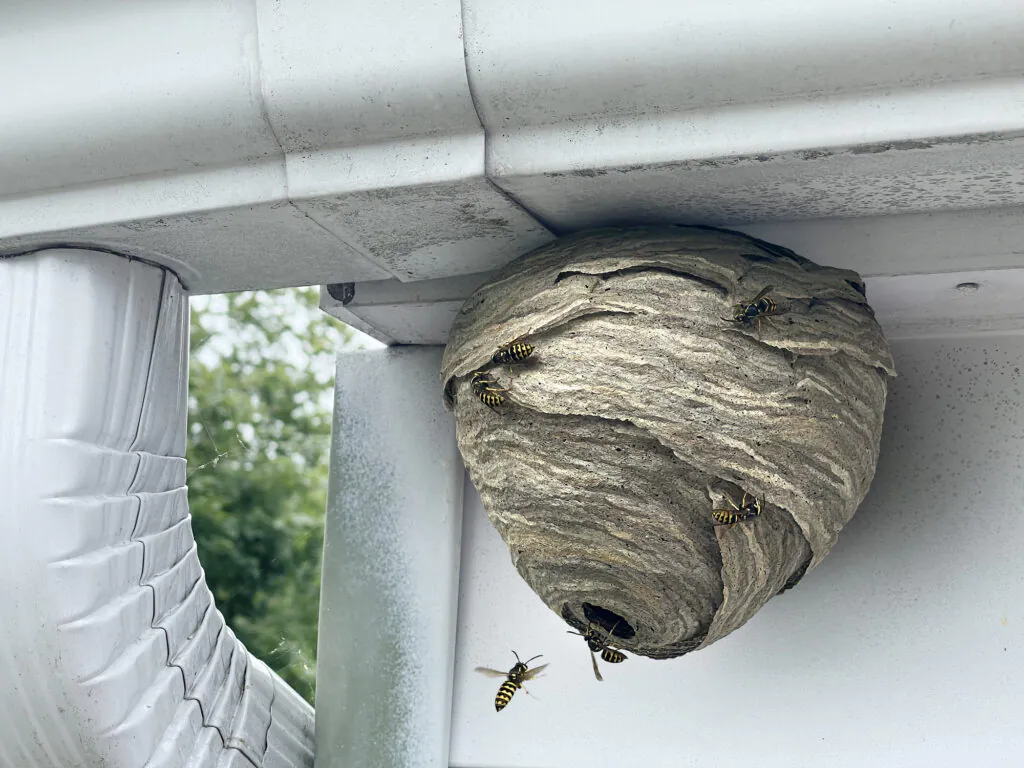
You may be able to deter a few wandering insects or a small, exposed wasp nest using natural repellents and over-the-counter sprays. But if you’re dealing with an established nest, especially one hidden inside a wall, roofline, or tree cavity, the most effective long-term solution to get rid of bees and wasps is to physically remove or, where appropriate, relocate the colony.
Homeowners may choose to handle the removal themselves, but doing so runs the risk of sending hundreds of these defensive insects into a frenzy, leaving you with multiple painful stings. That said, it’s far safer to leave the job to a professional pest control company, particularly where children, pets, or anyone with a known sting allergy are put at risk.
Once the immediate problem is under control, the goal shifts to keeping wasps and bees from coming back. Methods such as strategic landscaping, proper food and waste management, and sealing gaps around the home can go a long way toward keeping these insects away.
As you can probably tell, there’s more to bee and wasp control than meets the eye. That’s why in this guide we’ll walk you through each step in detail, so you can deal with the problem safely and enjoy your backyard barbecue or picnic without these buzzing gate-crashers.
First, Identify Whether You’re Dealing With Bees or Wasps
Bees and wasps may look similar at first glance, but that’s where the similarities end. Their behavior, nesting habits, and response to treatment are very different, and getting that wrong can lead to ineffective removal or, worse, put you at unnecessary risk.
Bees vs Wasps at a Glance
| Aspect | Bees | Wasps |
| Appearance | Round, fuzzy bodies that often look hairy | Smooth, shiny bodies with little or no hair |
| Body shape | Thick and rounded | Slim body with a narrow waist |
| Typical nesting sites | Tree hollows, wall cavities, chimneys, or underground burrows | Under roof eaves, decks, sheds, shrubs, attics, or wall voids |
| Aggression | Sting mainly in defense of the colony and less likely to chase | More defensive around nests and may react quickly to disturbance |
| Nest material | Wax comb filled with honey and brood | Paper-like nests made from chewed wood fibers |
| Role in the environment | Important pollinators that support flowers, gardens, and crops | Natural predators that help keep many insect populations in check |
| Can sting multiple times? | Usually no. Honey bees die after stinging, although bumble bees can sting more than once. | Yes. Most wasps can sting repeatedly. |
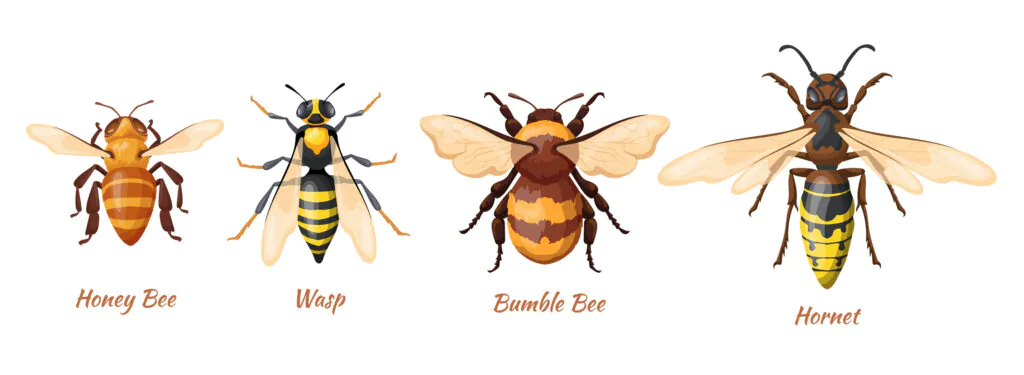
Both bees and wasps play an important role in the ecosystem. So as much as the first instinct may be to eliminate them entirely, that’s not always the best approach.
Between the two, however, wasps are generally more of a nuisance around homes and can pose a greater safety risk because some species are highly defensive. Yellowjackets, for example, can become aggressive enough that even the vibration from a lawnmower nearby is enough to trigger an attack.
Common species you’ll come across include honey bees, bumble bees, carpenter bees, cicada killers, and paper wasps. If you’re unsure which one you’re seeing at home, pest library on bees and wasps to help you differentiate them based on appearance, behavior, and nesting characteristics.
Where Do Bees and Wasps Usually Nest?
One of the easiest ways to narrow down what you’re dealing with is to look at where the nest is located, as different species favor different nesting sites.
- Trees and shrubs: You may spot honey bee swarms clustering temporarily on branches during swarming season or exposed paper nests built by paper wasps and bald-faced hornets. Dense shrubs can also provide sheltered nesting sites for certain wasp species.
- Roof eaves and soffits: These protected overhangs are prime nesting sites for paper wasps, bald-faced hornets, and occasionally yellowjackets. Nests here often go unnoticed until they become large enough to attract attention.
- Wall voids and siding: Honey bees are surprisingly good at finding their way through tiny openings in exterior walls, where they build wax comb inside wall cavities. Yellowjackets also commonly establish nests inside wall voids, while carpenter bees may tunnel into exposed wood siding or trim.
- Decks and under decking: The shaded, sheltered space beneath decks provides an ideal nesting location for yellowjackets and paper wasps. Carpenter bees may also bore into untreated wooden decking and support beams.
- Sheds, fences, and mailboxes: Paper wasps frequently attach nests to flat, sheltered surfaces where they’re protected from the weather.
- Attic vents and rooflines: These entry points allow insects to access interior voids. If you notice insects repeatedly flying in and out of the same spot, there’s a good chance a nest is tucked away behind the surface.
- Underground burrows: Yellowjackets commonly take over abandoned rodent burrows rather than digging their own.
DIY Methods to Get Rid of Bees and Wasps
Natural Repellents and Essential Oils
Certain botanical scents have proven to be effective as deterrents for bees and wasps, particularly peppermint, basil, clove, geranium, and lemongrass, among others.
These ingredients are commonly available as essential oils or organic sprays found at most garden centers and home improvement stores.
Alternatively, you can use the fresh leaves or plants themselves, but you’ll need to crush a fairly large amount to release enough of their natural oils and scent. The aroma can be quite strong, though, so be mindful if you’re using them around outdoor dining or entertaining areas.
Soap and Water
It sounds almost too simple to work, but a mixture of dish soap and water can actually be effective against an individual bee or wasp. The soap breaks down the waxy coating on their exoskeleton and can clog their breathing pores (spiracles), causing them to dehydrate and die.
Better yet, you probably already have both ingredients sitting in your kitchen. You can quickly whip up a soap solution and spray it on the occasional solitary wasp or a single bee flying around. Just don’t make the mistake of using it on an established nest or colony, as that can provoke hundreds or even thousands of defensive insects all at once.
Eliminate Food and Water Sources
Bees and wasps rely on sugars and proteins to sustain their colonies. To make your property less inviting, be sure to:
- Secure garbage bins so odors and residue stay contained.
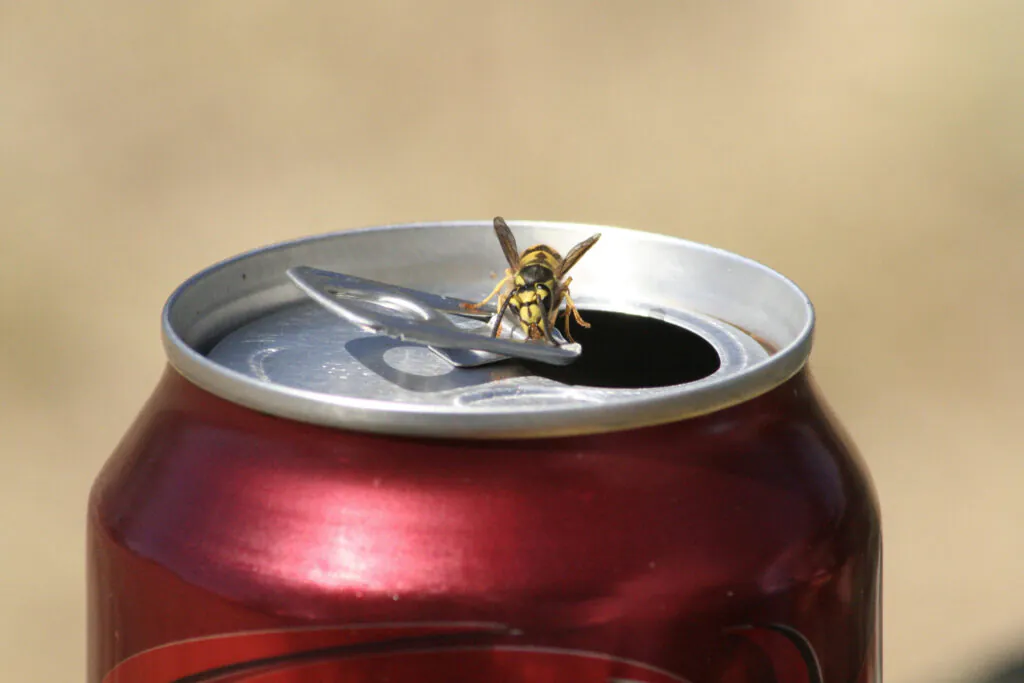
- Remove fallen fruit that ferments and attracts foraging insects.
- Clean outdoor eating areas after use, especially where sugary spills occur.
- Avoid leaving drinks, pet food, or exposed waste outside for extended periods.
Seal Potential Nesting Areas
Bees and wasps look for sheltered spaces that protect their colonies from the weather and predators. Inspect your home regularly and:
- Fill gaps and cracks along siding and exterior walls.
- Repair damaged soffits that can give insects access to roof voids.
- Seal around utility penetrations, including pipes, cables, and wiring.
- Close off gaps beneath decks and other outdoor structures.
- Install screens over attic vents and other exterior openings.
Strategic Landscaping
Where certain plants can help discourage bees and wasps, others naturally attract them instead. Flowering plants such as lilacs, sunflowers, wisteria, and lantana, among many others, are attractive food sources. If you’re particularly fond of gardening, consider planting them farther away from your porch, patio, windows, or other areas where people tend to spend time outdoors.
Just as important is to keep trees and shrubs around your home well-maintained. Leave enough space between bushes and exterior walls, and cut back branches that reach toward the roofline so they don’t provide easy access or sheltered nesting spots.
Hanging a Fake Wasp Nest
This involves hanging a decoy nest, typically made from paper, fabric, or other lightweight materials, to create the impression that the area is already occupied. Since many wasp species are territorial, this can discourage new queens from building a nest nearby.
However, do keep in mind that established colonies won’t fall for the ruse. It’s best treated as one of several preventive measures alongside proper garbage disposal, sealing potential entry points, and strategic landscaping.
Tips Before You Remove a Bee or Wasp Nest
Assess the Situation
Always start by sizing up what you’re dealing with before taking any further steps. Bee and wasp removal isn’t something to rush into. One wrong move can leave you facing multiple painful stings and, for anyone with a severe sting allergy, even a potentially fatal reaction.
If you’re dealing with nothing more than the occasional bee or wandering wasp, a simple dish soap and water mixture may be enough. However, if you’ve found an established nest, particularly one hidden inside a structure, underground, or high above the ground, leaving the job to a professional is much safer.
When to Perform Nest Removal
Wasps are least active during the late evening or early morning, when cooler temperatures mean most of the colony has returned to the nest and is less likely to be active.
How to Remove a Small Nest Safely
If you’re dealing with a small, exposed wasp nest that’s easy to reach, removal may be possible with the right precautions. But before you do anything, make sure you have a clear escape route and that children, pets, and anyone else nearby are well out of harm’s way.
Keep in mind the following:
- Wear proper protective clothing. Cover as much exposed skin as possible with long sleeves, long pants, closed-toe shoes, gloves, and eye protection.
- Use an insecticide. Always follow the manufacturer’s instructions and apply it from the recommended distance. Never use gasoline, fire, or other dangerous home remedies.
- Don’t stand directly underneath the nest. Work from the side whenever possible and always keep a clear path to retreat if the wasps suddenly go on the defensive.
- Give it time before removing the nest. Once there is no visible activity, remove and dispose of the nest properly to reduce the risk of recolonization.
Contact a Pest Management Professional
Bees and wasps certainly have an important role to play in the environment. But once they’ve made themselves at home in your yard or inside your property, they become more than just a nuisance. The safety risks alone are reason enough to take the situation seriously. The most practical and sustainable way to deal with the problem is to bring in a professional pest control company.
Modern Pest provides professional bee and wasp control for homeowners and businesses across New England. Contact us today or call (800) 323-7378 to request a free quote, ask a question, or schedule a service.
FAQs
Will removing the nest damage my home?
Removing an exposed nest causes little to no damage. However, if the nest is inside a wall, ceiling, or roofline, parts of the structure may need to be opened to fully remove the colony and any leftover comb.
How do you get rid of bees and wasps permanently?
To get rid of bees and wasps permanently, you need to remove the entire colony, including the queen, and any nesting material such as wax comb or paper nests. You must then seal the entry points and address conditions that attracted them in the first place.
Can I remove a wasp nest myself?
You can remove a small, exposed wasp nest if you wear proper protective equipment and tackle it at night when wasps are least active. Larger, hidden, or highly active nests carry a much higher risk of multiple stings and are usually best left to professionals.
What smell keeps bees and wasps away?
Scents like peppermint, clove, and lemongrass may help repel bees and wasps temporarily. However, they don’t affect the nest itself, so activity usually resumes once the scent fades.
Will bees or wasps return after removal?
Yes, they can if the nest isn’t completely removed, entry points aren’t sealed, or food and shelter remain readily available. New bees or wasps may simply move back into the same area once conditions become favorable again.