
Pest or Pollinator? Know Who’s Buzzing in Your Yard
Every summer, as the weather warms up and we spend more time outside, the familiar buzzing returns to our yards. For many homeowners, the sight and sound of a stinging insect can cause immediate panic.
We frequently get calls from people worried about a sudden influx of “bees” on their property. But as pest professionals, our goal isn’t just to eliminate bugs—we want to protect the helpful pollinators while safely managing the real threats!
Before you reach for the bug spray, take a moment to observe. Are you dealing with a beneficial garden helper or an aggressive structural pest? Check out our quick reference infographic below, and read on to learn how to tell the good guys from the nuisance bugs.
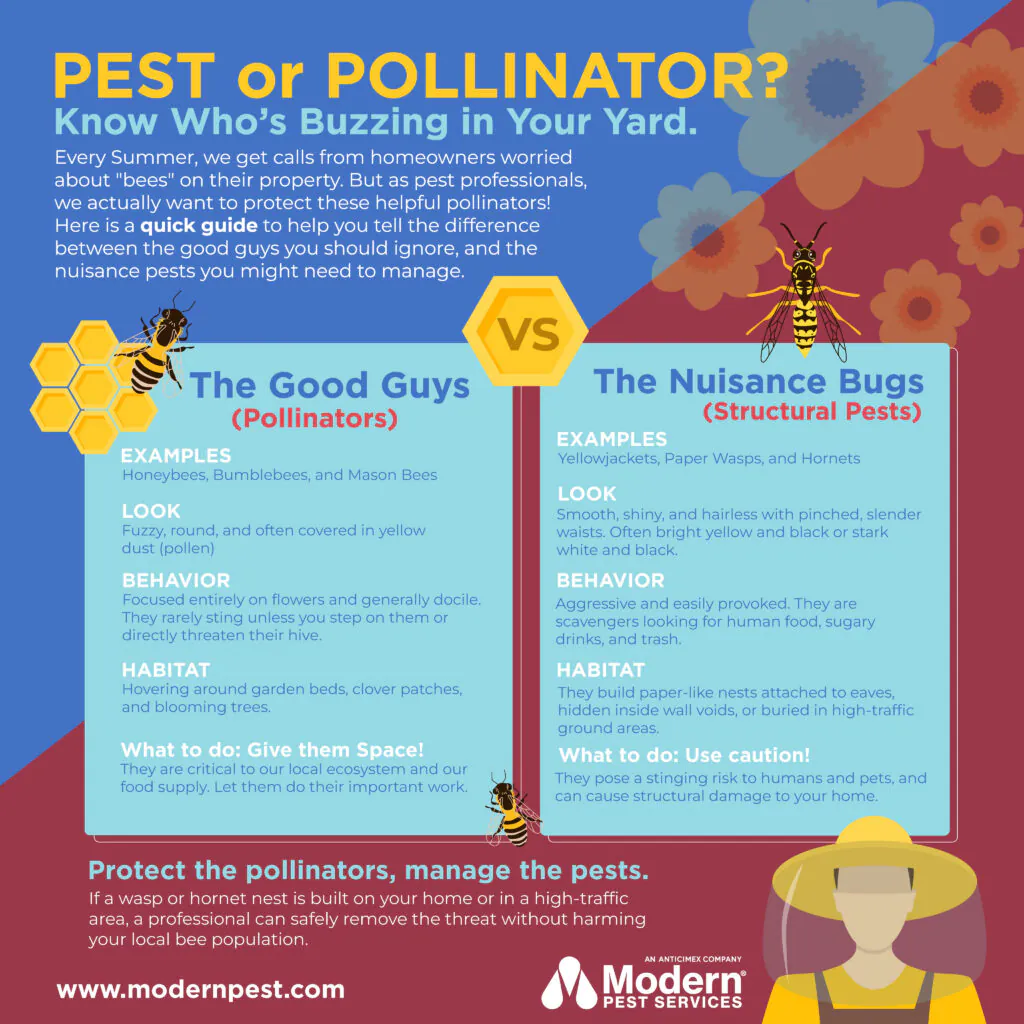
🐝 The Good Guys: Pollinators
Pollinators are the hardworking heroes of our local ecosystems and our food supply. Without them, our gardens wouldn’t bloom and our crops wouldn’t grow.
Common Examples: Honeybees, Bumblebees, and Mason Bees
How to Identify Them
- Look: Think of these as the “teddy bears” of the insect world. They are fuzzy, round, and often covered in a dusting of yellow pollen.
- Behavior: Pollinators are incredibly focused on their jobs. They are generally docile and spend their time moving from flower to flower. They rarely sting unless you accidentally step on them or directly threaten their hive.
- Habitat: You will usually find them hovering around garden beds, clover patches in your lawn, and blooming trees or shrubs.
What Should You Do?
Give them space! Let them do their important work. Because they are not aggressive and play a critical role in our environment, they should be left completely alone.
🚫 The Nuisance Bugs: Structural Pests
While pollinators are busy helping flowers grow, structural pests are usually busy crashing your backyard BBQ. These are the insects that pose a legitimate stinging risk to you, your family, and your pets.
Common Examples: Yellowjackets, Paper Wasps, and Hornets
How to Identify Them
- Look: Unlike bees, these pests are smooth, shiny, and hairless. They have pinched, very slender waists and often feature bright, stark coloring (usually intense yellow and black, or white and black).
- Behavior: They are aggressive and easily provoked. Instead of focusing on flowers, they are scavengers. If an insect is hovering over your sugary drink, landing on your hamburger, or digging through your trash can, it is likely a wasp or yellowjacket.
- Habitat: They build paper-like nests that can cause structural issues. You’ll find these attached to eaves, hidden deep inside wall voids, or even buried underground in high-traffic areas of your yard.
What Should You Do?
Use extreme caution! Because they are easily agitated and can sting multiple times, you should avoid interacting with them or trying to knock down their nests yourself.
Protect the Pollinators, Manage the Pests
When dealing with stinging insects, the golden rule is simple: protect the pollinators, manage the pests. If you notice honeybees or bumblebees enjoying your garden, simply admire them from a distance. However, if a wasp or hornet nest is built on your home, near a doorway, or in a high-traffic area of your yard where children or pets play, it’s time to call in the experts.
A professional pest control technician can accurately identify the insect and safely remove the threat of nuisance pests without bringing any harm to your local, vital bee population.